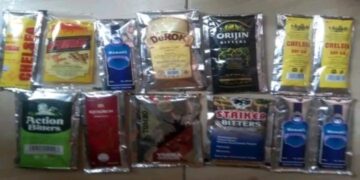





The Food, Beverages and Tobacco Senior Staff Association has raised concerns over the potential loss of jobs following the enforcement of the ban on alcoholic drinks sold in sachets and PET bottles below 200ml by the National Agency for Food and Drug Administration and Control.
The Executive Secretary of the association, Solomon Adebosin, urged NAFDAC to engage stakeholders in dialogue to find alternative solutions that would protect local businesses and employment.
NAFDAC began enforcing the ban on January 21, 2026, after the Senate directed the agency to halt the sale of sachet alcohol. The agency had initially announced the ban on November 11, 2025, and planned to fully enforce it by December 2025. The enforcement was temporarily suspended after the Federal Government ordered consultations with stakeholders.
However, the Director-General of NAFDAC, Prof. Mojisola Adeyeye, later confirmed that the agency received a fresh order from the Senate to proceed with the ban. She stated that the move is aimed at protecting public health, especially vulnerable groups such as children, adolescents, and young adults, from harmful alcohol use.
Speaking in an interview with ARISE News on Tuesday, Adebosin argued that sachet alcohol has helped consumers manage their spending and drink in moderation.
He said, “The idea of products coming in sachet is because of the way the economy in Nigeria is now. We have something for ourselves to be a search economy in most of the things that we have because of affordability.”
He added that sachet packaging helps prevent excessive consumption because consumers are limited to a small quantity.
“A lot of people just take one sachet and they are okay. Rather than having a big volume that you now be taking and taking and now, you know, go overboard,” Adebosin said.
Adebosin also warned that the ban could harm local manufacturers and threaten employment, noting that many indigenous Nigerians have invested heavily in setting up companies that provide jobs directly and indirectly.
He said, “When you come against products like this, which are made by indigenous Nigerians, we are looking at the issue of employment. By shutting it down, you’re going to be affecting that.”
The association also expressed concern that the ban may discourage foreign investors, as they may view the move as unfriendly to local businesses.
Adebosin therefore called on NAFDAC to explore alternatives, stressing that banning should not be the first response.
“We can have a dialogue on this. We can look at different ways of solving this issue. The issue should not just be ban,” he said.