




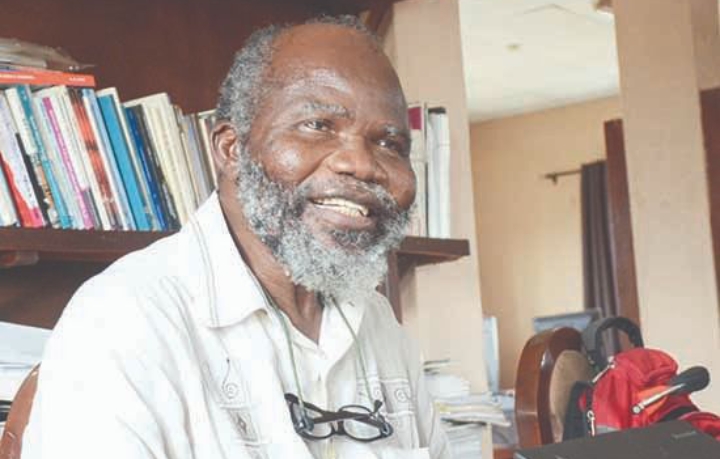
Former Commandant of the Nigerian Army Training and Doctrine Command, Major General Ishola Williams (retd.), has declared that corruption and a culture of impunity within Nigeria’s security and political institutions remain the major drivers of the country’s worsening insecurity.
Williams spoke during an interview on Frontline, a current affairs programme on Eagle 102.5 FM, Ilese Ijebu, on Tuesday, where he delivered a sweeping assessment of Nigeria’s security architecture, military spending, legislative oversight and political leadership.
The retired general argued that trillions of naira have been spent on defence and security over the years, yet insecurity continues to escalate because accountability is weak and institutional discipline has collapsed.
“Trillions of naira have been spent on defence and security. Yet insecurity keeps worsening. Where is the accountability? Why is nobody asking how this money is being spent? The truth is that corruption has eaten deep into the system,” he said.
He criticised what he described as the absence of consequences for operational failures, noting that in other countries, commanders are relieved of their duties after major security breaches.
“In serious countries, if 100 civilians are massacred, commanders are sacked immediately. In Nigeria, nothing happens. No resignation. No dismissal. No investigation. That culture of impunity is why insecurity persists,” he added.
Williams also faulted the oversight role of the National Assembly, accusing legislative committees of failing to demand performance from security agencies.
“The legislative oversight committees are more interested in contracts than accountability. They don’t conduct serious reviews. They don’t demand performance. That is why nothing changes,” he stated.
Beyond corruption, the former army chief maintained that Nigeria’s crisis is fundamentally a public safety breakdown rather than terrorism or foreign aggression. According to him, no neighbouring country currently poses a threat of invasion, and most of the violence is being perpetrated by Nigerians.
“What we have is a public safety crisis caused by our own citizens, due to governance failure and institutional collapse,” he said.
He further dismissed claims that large numbers of foreign fighters are infiltrating Nigeria, insisting that the violence is largely homegrown and rooted in political manipulation, poverty and economic desperation.
Williams stressed that military hardware alone cannot solve the crisis, arguing that intelligence, discipline and operational doctrine matter more than weapons procurement.
“Equipment does not win wars. What wins is intelligence, doctrine, discipline and motivation. We keep buying weapons without developing operational doctrine. This is waste, not strategy,” he said.
He advocated decentralised policing and intelligence driven community security as sustainable solutions. According to him, state policing remains a political decision that requires urgent legislative action.
He commended the Western Nigeria Security Network, codenamed Western Nigeria Security Network, popularly known as Amotekun, describing it as a practical model of community based security despite funding limitations.
“Security cannot be imported into a community. It must grow from within. When policing is done by people who understand the terrain, language and culture, intelligence flows naturally,” he noted.
Williams warned that without accountability, institutional reform and political courage, insecurity will continue to undermine national stability.
“Nigeria does not lack resources. We lack political will and moral leadership,” he concluded.