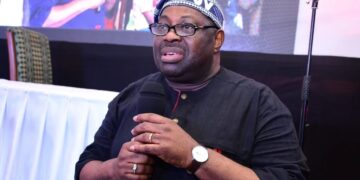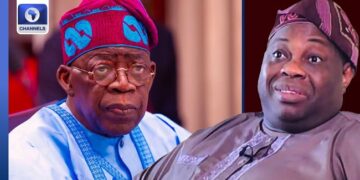




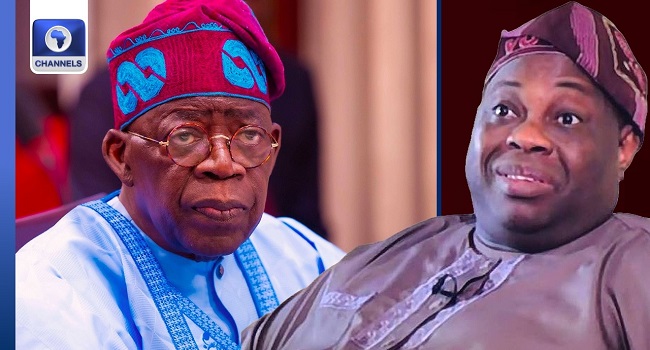
A chieftain of the African Democratic Congress (ADC), Bashorun Dele Momodu, has expressed doubt over President Bola Tinubu’s ability to secure re-election in 2027 through financial inducements, insisting that money alone may not guarantee victory at the polls.
Momodu made the remarks on Wednesday during an interview on Frontline, a current affairs programme on Eagle 102.5 FM, Ilese-Ijebu, Ogun State, where he discussed factors likely to influence voting patterns in the 2027 presidential election.
According to him, ethnicity, religion and money have remained major determinants of electoral outcomes in Nigeria, but he argued that the prevailing economic hardship could weaken the influence of financial inducements on voters.
“Tinubu believes he can buy the whole of Nigeria, but my personal belief is that if he could buy the whole of Lagos, I doubt if he can use money to buy the whole of Nigeria,” he said.
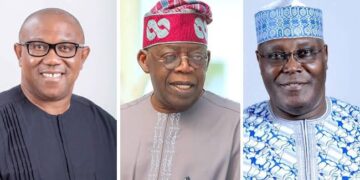
The ADC chieftain maintained that former Vice-President Atiku Abubakar could enjoy an advantage in the contest, particularly because of his perceived support base in the North and what Momodu described as a religious balance in his political configuration.
He argued that Atiku’s northern background, combined with a potential Christian running mate from the South, could appeal to voters across religious and regional divides.
Momodu, however, acknowledged that Tinubu could have a financial advantage over other presidential contenders, given his political influence and access to resources associated with the ruling party.
He cautioned that such an advantage might not necessarily translate into electoral success, arguing that voters could accept money during campaigns without voting for the candidate offering it.
To support his argument, Momodu cited the Osun State governorship election, claiming that the distribution of substantial sums of money did not prevent the victory of Governor Ademola Adeleke.
“And a lot of people will take the money like they took it in Osun State. Yes, people’s eyes are wide open now that they brought a lot of money to Osun State, but they still lost the election to Adeleke Ademola,” he said.
He also pointed to political developments in Osun and Oyo states as possible indications of changing political sentiments in the South-West, a region considered important to Tinubu’s electoral prospects.
The media entrepreneur further recalled that Tinubu lost Lagos State to the Labour Party’s presidential candidate, Peter Obi, in the 2023 presidential election, suggesting that the outcome demonstrated that the president’s political influence did not guarantee electoral victory in every circumstance.
Momodu argued that the rising cost of living, hunger and other economic challenges could become decisive issues in the next election, cutting across ethnic, religious and regional affiliations.
“The common factor now is the hunger in the land,” he said.