




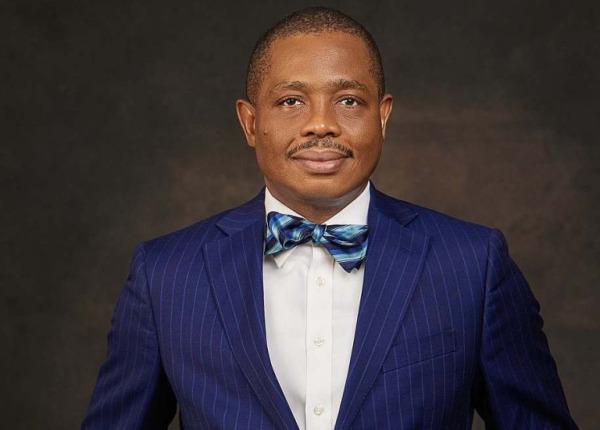
The President of the Nigerian Bar Association, Mazi Afam Osigwe, SAN, has criticized state governors who are yet to comply with the Supreme Court judgment granting financial autonomy to local governments, saying their actions undermine democracy and the rule of law.
Osigwe made this known during an interview on Frontline, a current affairs programme on Eagle 102.5 FM, Ilese Ijebu, where he expressed concern over the continued control of local government allocations by some state governments despite the apex court’s clear directive.
On July 11, 2024, the Supreme Court of Nigeria ruled that funds meant for the 774 local government areas must be paid directly from the Federation Account to the councils, barring state governors and the Minister of the FCT from withholding or controlling such allocations. The judgment affirmed the constitutional financial autonomy of local governments as a critical step toward strengthening governance at the grassroots.
Despite calls from Tinubu and other stakeholders urging compliance, several governors have yet to implement the ruling.
Speaking on the situation, Osigwe said, “If the law says pay it into the accounts of the local government, and the Supreme Court has now said pay it directly to them, and nobody is respecting it, it speaks volumes about our attitude to governance, and our attitude to judicial pronouncements. The federal government has a duty, the Attorney General of the President has a duty to enforce it.”
He added that the persistent disregard for court orders reflects a deeper governance problem. “Our problem is our penchant for disobeying laws, for acting as if the laws are not binding on us, especially when we have executive powers. Acting as if laws are meant for the weak and the poor, while those in power disregard them, is what prevents progress,” he said.
The NBA president maintained that the effectiveness of any constitution depends largely on the willingness of leaders and citizens to respect and enforce it. According to him, even the best drafted constitution would fail if operators lack commitment to uphold its provisions.
On judicial independence, Osigwe also addressed the controversy involving the Chief Judge of the Federal High Court, Justice John Terhemba Tsoho, and the Code of Conduct Bureau.
He insisted that as a judicial officer, the judge must first be subjected to the disciplinary process of the National Judicial Council before any prosecution can be initiated, warning that direct action by an executive body could threaten the independence of the judiciary.
He further advocated for the digitalization of asset declarations to promote transparency and prevent intimidation, stressing that electronic records would allow judicial officers update newly acquired assets seamlessly.
On electoral reforms, Osigwe noted that while the Electoral Act 2026 introduced some improvements, including reducing the timeline for INEC to access funds, it missed an opportunity to address concerns around electronic transmission of results.
He stated that good laws alone cannot guarantee credible elections without responsible conduct by political actors.
Osigwe concluded by reiterating his call on governors to comply with the Supreme Court ruling on local government funds, insisting that respect for judicial pronouncements remains essential for Nigeria’s democratic growth and institutional stability.