








Morocco has rejected the Court of Arbitration for Sport’s (CAS) decision restoring Senegal as champions of the 2025 Africa Cup of Nations, vowing to explore further legal options to challenge the verdict.
The Royal Moroccan Football Federation (FRMF), in a statement issued on Tuesday, expressed dissatisfaction with the arbitration process and questioned the legal basis of the ruling delivered by the Lausanne-based tribunal.
The federation also raised concerns over the independence and impartiality of the three-member CAS panel, citing an alleged telephone conversation between Senegalese Football Federation President, Abdoulaye Fall, and German arbitrator, Ulrich Haas, one of the judges who handled the appeal.
According to the Moroccan federation, the alleged conversation took place 48 hours before the verdict was delivered, raising questions about the credibility of the proceedings.
The FRMF said it had previously brought the matter to the attention of CAS and requested clarification but remained dissatisfied with the tribunal’s response.
It also faulted the legal interpretation adopted by the panel, arguing that the ruling did not adequately consider provisions of the International Football Association Board and FIFA regulations concerning players who leave the field without the referee’s authorisation.
The federation maintained that such conduct attracts disciplinary sanctions under football regulations and should have been considered in determining the outcome of the disputed final.
Consequently, Morocco said it would explore all available legal avenues to challenge the decision.
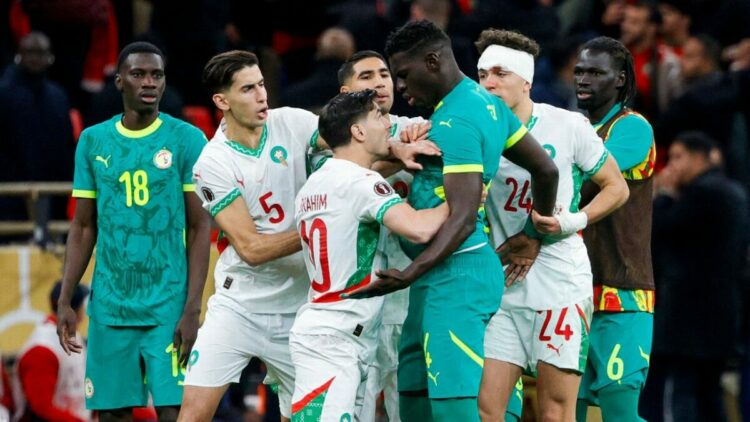
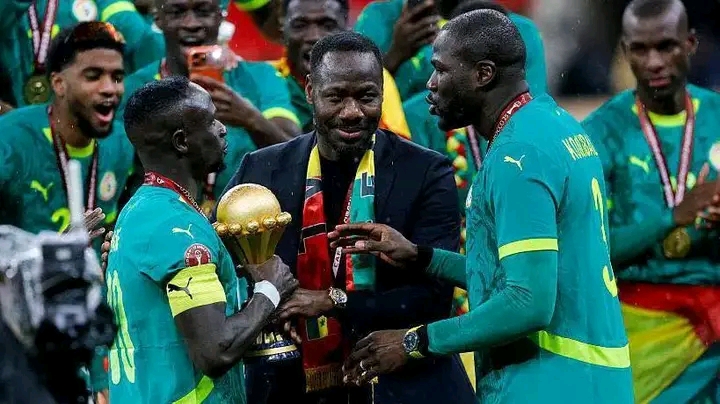
The development followed Tuesday’s unanimous ruling by CAS, which upheld Senegal’s appeal, overturned the Confederation of African Football Appeal Board’s decision and restored the original result of the January 18 final played in Rabat.
Senegal had defeated hosts Morocco 1-0 after extra time, with Pape Gueye scoring the decisive goal.
However, CAF’s Appeal Board overturned the result in March, awarding Morocco a 3-0 victory after ruling that Senegal had forfeited the match when its players temporarily walked off the pitch in protest against a late penalty awarded to Morocco.
Senegal subsequently appealed to CAS, arguing that the referee’s decision to allow the match to resume meant the game could not be treated as a forfeiture.
In its ruling, CAS held that referee Jean-Jacques Ndala acted within his authority when he ordered the match to resume, adding that his decision was protected under the field-of-play doctrine.
The tribunal further ruled that Articles 82 and 84 of the AFCON regulations, which CAF relied upon to award Morocco the title, were inapplicable because the referee had not permanently abandoned the match.
Meanwhile, any attempt by Morocco to overturn the CAS decision would face strict limitations under Swiss law.
The Swiss Federal Supreme Court can review international arbitration awards only on specific grounds, including improper constitution of the tribunal, lack of jurisdiction, violations of the right to be heard and breaches of public policy.
The Moroccan federation has yet to disclose the specific legal procedure it intends to pursue or confirm whether formal proceedings have commenced.
For now, the CAS ruling restores Senegal’s status as 2025 African champions, although Morocco’s decision to challenge the verdict could prolong the controversy surrounding the final.