

Nigeria’s fight against insecurity took a new turn on Wednesday as the Minister of Defence, Gen. Christopher Musa, declared that government must no longer negotiate with terrorists or pay ransom under any circumstance.
He spoke during his ministerial screening before the Senate in Abuja, stressing that ransom only strengthens criminal networks and prolongs violence.
“There is no negotiation with any criminal. When people pay ransoms, it buys terrorists time to regroup, re-arm and plan new attacks. Communities that negotiated still got attacked later,” he said. Musa insisted that Nigeria’s banking system has the capacity to trace ransom money if fully deployed.
He noted that military action alone cannot win the war, describing kinetic efforts as only a fraction of what is required.
According to him, poverty, poor governance and weak local government structures continue to fuel criminality. He urged state and local authorities to take ownership of community security, saying the burden cannot rest on the military alone.
The retired general criticised the slow pace of terrorism trials in Nigeria, warning that long delays weaken morale among security operatives. “In some countries, terrorism cases are handled decisively. Here, cases drag for years. It discourages security forces who risk their lives to make arrests,” he said. He called for stronger penalties, special courts and accelerated hearings.
Musa also raised concern about rising maritime crime, cultism and illegal mining, describing them as growing threats that demand urgent attention.
He confirmed the expansion of Operation Delta Safe to cover new trouble spots and called for a total ban on illegal mining activities, which he said fund armed groups in forest belts.
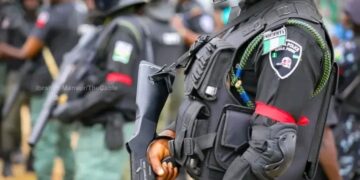
He announced that military checkpoints across the country would be reduced as troops return to field operations in forests and ungoverned spaces.
Restoring access to farmlands, he said, remains essential to national stability. “A hungry man is an angry man. Protecting farmers means protecting the nation,” he added.
On recruitment, Musa disclosed that although more than 70,000 Nigerians apply to join the military each year, many prospective recruits reject deployment to conflict zones.
He argued that a unified national database would help verify identities, track criminals and strengthen recruitment integrity.
He described Nigeria’s fragmented data systems as a major weakness exploited by terrorists, bandits and cyber-criminals. “Something as simple as a unified database for all citizens is urgently needed. Not a situation where immigration has one, quarantine has another. Once you commit a crime, it should be easy to track and trace you,” he said.
While Musa was making his case before the Senate, the House of Representatives adopted far-reaching security reform resolutions after a three-day debate.
The lawmakers demanded open and transparent prosecution of all terrorism-related cases, strengthened intelligence sharing, improved welfare for security personnel and a review of military strategy in volatile regions.
They commended steps taken by Tinubu’s administration, including the recruitment of 20,000 police officers and redeployment of VIP security details to core policing duties.
The House also recommended a Joint Intelligence Fusion Centre, tighter border controls using drones and biometric systems, and public naming of terrorism financiers.
Human rights lawyers reacted differently to the call for open trial. Evans Ufeli warned that open proceedings could expose witnesses to danger unless their identities are masked.
“The real concern is with witnesses. They can be easily identified and targeted. If protective measures are put in place, then it makes sense,” he said.
Another lawyer, Deji Adeyanju, dismissed the lawmakers’ move as insincere, saying political actors still engage with terrorists in their constituencies.
“There is too much romance with terrorists in Nigeria. The only time you feel the presence of security agencies is when people call for a protest,” he said. He argued that open trial alone cannot solve the problem.
On his part, rights lawyer Effiong Inibehe backed the open trial proposal, saying it would promote transparency. “I support an open trial for terrorism suspects. It will give victims a sense of justice,” he said, while calling for masked and protected witnesses.
Meanwhile, the Senate pushed tougher measures as lawmakers debated amendments to the 2022 Terrorism (Prevention and Prohibition) Act. The chamber moved to impose the death penalty on kidnappers and those who sponsor, support or supply information to them.
The proposal, led by Senate Leader Opeyemi Bamidele, seeks to classify kidnapping and related crimes as terrorism.
Bamidele warned that kidnapping has become commercialised and militarised, saying it now bears the full characteristics of terrorism. “Nigerians are kidnapped on highways, in schools, in homes, on farms and in markets. This is not a mere crime. It is terrorism in its purest form,” he said.
Senators Adams Oshiomhole and Orji Kalu backed the amendments, with Oshiomhole rejecting deradicalisation programmes for terror suspects. “If you are caught and convicted for acts of terrorism, then the penalty should be death,” he said. Kalu added that informants and sponsors must face the same punishment, insisting that Nigerians have suffered enough.
Senate President Godswill Akpabio referred the bill to the Committees on Judiciary, National Security and Interior for further action, with a report expected in two weeks.