




By Alhaji Korede Quadri, FCIB
The process leading to the emergence of the Awujale of Ijebu Ode, the Paramount Ruler of Ijebuland, remains a matter of profound cultural and institutional importance. It is a process governed by long established customs and traditions that have, over time, preserved the dignity, unity, and hierarchy of Ijebuland. Any deviation from these guiding principles weakens the moral authority of the throne and undermines public confidence in the institution.
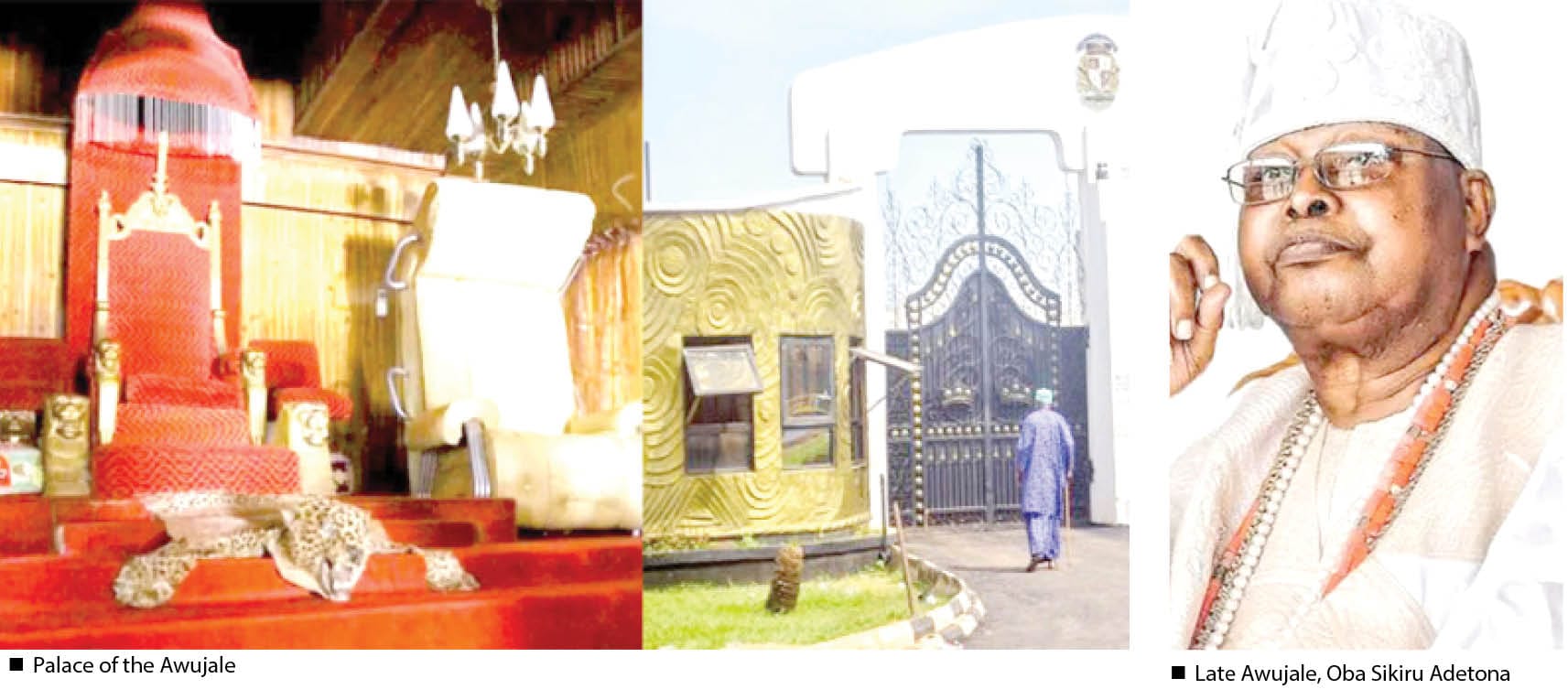
Ijebu Ode has four recognised ruling houses, and by the accepted order of rotation, the Fusegunwa Ruling House is next in line to produce the Awujale following the demise of the late Oba Sikiru Kayode Adetona. This position is rooted in history and tradition and should not be subjected to unnecessary controversy or manipulation.
The Awujale occupies a unique and pre eminent position among traditional rulers in Ijebuland. He is the foremost monarch, with over fifty Obas across various towns and categories traditionally acknowledging his seniority. This status places a responsibility on all stakeholders to ensure that the process produces a monarch whose legitimacy is unquestioned and whose emergence reflects the collective will of tradition.
For this reason, the selection process must be transparent, credible, and faithful to custom. The next Awujale must be a person of integrity and sincerity. Financial strength or political influence has never been a defining requirement for the stool and must not be introduced as one now.
History provides a compelling example. The late Awujale emerged in 1960 while he was still in school, despite the presence of older and seemingly more established candidates from the Anikilaya Ruling House. Guided by the 1957 declaration law of the old Western Region under Chief Obafemi Awolowo, the process was conducted with fairness and openness. That sincerity produced a monarch whose reign earned widespread respect.
Prominent leaders of that era, including Chief Sonibare of the Action Group from Ijebu Ode and the Ogbeni Oja, Chief Timothy Odutola, had the influence to alter the outcome but chose to respect tradition. Their conduct remains a standard against which the present process should be measured.
Against this historical background, the presentation of ninety five names by the Fusegunwa Ruling House to the Afobajes does not portray the ruling house committee in a positive light. It suggests a lack of thorough internal screening and raises questions about the seriousness of the exercise. A more disciplined approach would have been to streamline the list internally, a step that appears not to have been taken, possibly due to rumoured vested interests.
Had such internal due diligence been carried out, the Afobajes would have been better positioned to further narrow the list before presenting suitable candidates to the traditionalists. This would have enhanced clarity, reduced suspicion, and promoted a more rancour free and orderly selection process in line with established customs.
At the same time, it is important that the Afobajes themselves are not hastily branded as biased, corrupt, or compromised. As custodians of a critical stage of the process, they deserve the opportunity to carry out their responsibilities without undue pressure or prejudgment, provided they act within the bounds of tradition and fairness.
In the same spirit, confidence must also be expressed in the leadership currently overseeing the transitional phase. The regent and the Ogbeni Oja, High Chief Sanny Kuku, occupy positions of great responsibility. His long standing reputation for integrity and principled conduct offers reassurance that the process will not be reduced to a transactional exercise.
The recent allegations and counter allegations of corruption have nonetheless damaged public trust and compelled the Ogun State Government to involve the DSS and the Police to investigate the process from the outset. While such intervention may be necessary, it reflects a collective failure to manage the process in a manner that inspires confidence.
In view of these developments, a fresh process, as reportedly directed by the state government, appears justified. This is an opportunity to reset the exercise, eliminate doubts, and reaffirm the centrality of culture and tradition in the selection of the Awujale.
The Awujale stool must never be for sale. It is a sacred trust, not a reward for wealth or influence. Any attempt to commercialise it is a betrayal of Ijebu values and a disservice to future generations.
Attempts by some individuals to drag the name of President Bola Tinubu into the matter are unnecessary. President Bola Tinubu is known to respect due process and the rule of law. Whoever emerges through a transparent, lawful, and culturally grounded process will naturally earn the respect of the President and the Nigerian state.
Ultimately, all stakeholders must return to the path of restraint, fairness, and respect for tradition. The credibility of the Awujale stool and the unity of Ijebuland depend on the choices made at this critical moment.
Alh. Korede Quadri(KQ), FCIB
Saturday 14th February, 2026