

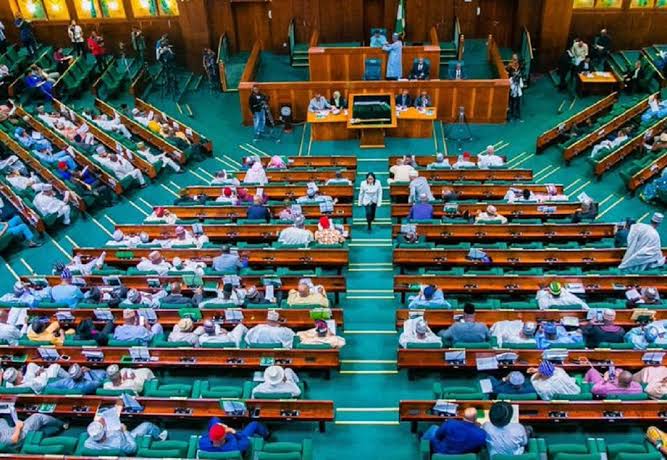
The House of Representatives has rejected the decision by its minority caucus to set up an ad-hoc committee to investigate alleged alterations to recently enacted tax laws, describing the action as procedurally flawed and without institutional authority.
In a statement released on Sunday, the House spokesman, Mr. Akin Rotimi, said the minority caucus formed the committee on January 2, 2026, and had reportedly submitted an interim report, but the move lacked the power to act as an official parliamentary body.
Rotimi acknowledged the role of the minority caucus in a parliamentary democracy, noting that it has the right to express dissent and raise public concerns. However, he said there is a clear difference between political activities and the formal processes of the House.
He said, “The House recognises the legitimate role of the minority caucus within parliamentary democracy and affirms its right to express dissenting opinions, engage in policy advocacy, and raise public concerns.
“However, it is necessary to clearly distinguish between political activities and the formal parliamentary processes of the House.”
Rotimi added that the House’s Standing Orders grant the authority to constitute an ad-hoc committee only to the House acting in plenary or the Speaker exercising powers conferred under the Standing Orders.
“No political caucus, whether majority or minority, possesses the procedural authority to establish a committee that carries the status of a parliamentary body,” he said.
He further explained that caucuses serve as platforms for consultation among members but do not have institutional standing, investigative authority, oversight jurisdiction, or the power to summon individuals or demand official documents.
“Any action taken by a caucus in this regard is therefore non-binding, informal, and without legal or institutional consequence,” he said.
Rotimi noted that any interim or final report produced by such a caucus-led body cannot be laid before the House, received as a parliamentary document, or form part of the official legislative record.
He described the action as “procedurally improper, inconsistent with parliamentary norms, liable to set an unwholesome precedent, and to create unnecessary public confusion,” especially as the issue had already been addressed through established parliamentary mechanisms.
Rotimi recalled that in December 2025, the House constituted a bipartisan ad-hoc committee, chaired by Muktar Betara, to examine concerns raised by opposition lawmaker Abdussamad Dasuki over multiple documents claiming to be official gazettes of the tax legislation.
He said the committee, appointed in line with the Standing Orders, included lawmakers from both the ruling and opposition parties and remains in force.
“That committee was constituted by the House in line with the Standing Orders. It remains in force and continues to discharge its assignment. Upon the conclusion of its work, it will lay its report before the House in plenary,” he stated.
The spokesman added that the National Assembly, acting jointly through both chambers, has published the official Gazette of the National Assembly and issued certified true copies of the enacted tax laws.
“The legislative process has therefore been concluded and given full legal effect,” he said, noting that Parliament has disowned any unofficial documents in circulation.
He warned that the establishment of a parallel caucus-led committee and the circulation of purported interim findings only served to increase public misunderstanding on an issue that has already been resolved.
Rotimi reiterated the House’s commitment to transparency and effective legislative oversight, but said these objectives must be pursued strictly within the framework of the Constitution, Standing Orders, and established parliamentary conventions.
“For the avoidance of doubt, only committees constituted by the House in plenary or by the Speaker have parliamentary authority,” he said, urging the public to regard any committee or report not authorised by the House as a political initiative rather than an official action.