



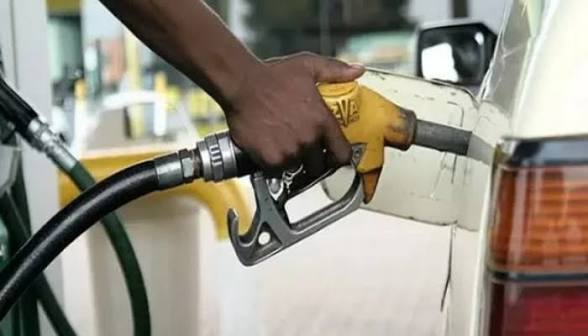

Transportation fares have increased across parts of Anambra State following a sharp rise in the pump price of Premium Motor Spirit, popularly known as petrol, which sold for as high as ₦1,200 per litre in some areas over the weekend.
According to reports, the development has affected both intra state and inter state travel, leaving many commuters struggling with higher transport costs.
Findings across major cities including Onitsha, Nnewi, Ekwulobia and parts of Awka between Saturday and Sunday showed that many filling stations were not dispensing petrol, while the few selling the product had long queues, with prices ranging between ₦1,100 and ₦1,200 per litre.
Several Nigerian National Petroleum Company Limited retail outlets and other major marketers in Awka and surrounding areas were reportedly closed to customers on Sunday, while some stations that opened did not sell petrol.
However, Altrac Filling Station and Hanaco, located along the Onitsha Awka Expressway, displayed pump prices of ₦1,150 per litre, attracting a small number of motorists desperate to buy fuel.
The spike in petrol prices has forced transport operators to increase fares by more than 50 percent on some routes. Trips that previously cost about ₦200 within cities were raised to around ₦300, while fares that used to be ₦500 increased to about ₦700.
At the Upper Iweka Motor Park in Onitsha, transporters reportedly charged about ₦2,000 for trips from Onitsha to Awka, compared with the previous fares of between ₦1,000 and ₦1,500.
Similarly, at Ekwulobia Motor Park, passengers travelling from Igboukwu to Nkpor and Onitsha were asked to pay as much as ₦4,000, up from about ₦2,000, leaving many commuters stranded.
The situation has also pushed up the prices of goods and services in several markets visited, as traders attributed the increases to higher transportation and fuel costs.
Some commuters travelling to and from churches and other weekend events were seen arguing with commercial drivers over the new fares, while others chose to trek to their destinations.
A commercial driver at Solution Park in Awka, Chukwudi Ezeh, said the rise in fares became inevitable following the persistent increase in the pump price of petrol.
“The increase in fares is expected as a result of the frequent increase in the pump price of petrol,” he said.
“The increase started early last week when it was sold for ₦960 from ₦860, and it continued until it got to about ₦1,200 over the weekend. The increase in transportation is not our fault. We maintained the same fares even as petrol prices kept rising daily until we could no longer bear the burden alone.”
Another transporter at Nnewi Triangle Park, Chidi Onyekachukwu, said the development had affected drivers’ earnings.
“Our daily income has been badly affected by the increase in the price of fuel. To recover these costs, we have no choice but to raise fares slightly so we can still make a take home income,” he said.
He called on the government to intervene, noting that the instability in petrol prices in recent days was becoming a major concern.
A commuter, Ifeoma Obiora, a civil servant who resides in Onitsha but works in Awka, said she recently paid ₦2,000 for a one way trip that previously cost ₦1,500.
“The increase in transport fare has placed an additional burden on household finances. To worsen the situation, we have not had electricity for weeks, forcing many people to depend on petrol powered generators to pump water and run basic appliances,” she said.
Another resident, Mama Chisom, said she had to buy petrol at ₦1,200 per litre to power her generator due to persistent electricity outages.
“This is terrible. We do not know how this week will look if the price continues to increase as it did last week,” she lamented.
Meanwhile, the Chairman of the Independent Petroleum Marketers Association of Nigeria, Enugu Zone, Chinedu Anyaso, attributed the increase in petrol prices to a hike at the supply source.
Anyaso, who oversees Anambra, Ebonyi and Enugu states, said the rise in pump price was not the fault of marketers.
“The price of PMS has increased because Dangote, which is our major supplier, added about ₦110 to every litre. So the hike is not artificial or arbitrary, it reflects the current reality in the supply chain,” he explained.