

The Federal Government has announced plans to introduce a mandatory vehicle recycling fee from 2026, a move expected to generate more than N150 billion annually while reforming Nigeria’s largely informal automotive recycling sector.
The initiative was disclosed by the National Automotive Design and Development Council in a statement issued on Sunday.
The Director General of the council, Joseph Osanipin, said the policy would be implemented through an End of Life Vehicle programme already approved by the government.
Osanipin explained that the programme would formalise the disposal and recycling of vehicles that have reached the end of their useful lives, converting what is currently an environmental and safety challenge into a major economic opportunity.
“In developed countries, when you buy a new vehicle, during registration, you make a payment towards the disposal of that vehicle when it reaches the end of its life. When it gets to the end of its life, somebody has to be responsible for the disposal,” he said.
According to him, Nigeria will adopt a similar model by charging a modest recycling fee at the point of vehicle registration. The fund will be used to ensure environmentally safe disposal and recycling of vehicles, even though the policy may initially face resistance from the public.
He noted that Nigeria already has a vibrant informal market for second hand auto parts, popularly known as the Belgian parts market. This market, he said, is driven largely by concerns about the durability and quality of newly imported parts.
Studies conducted by the council showed that more than 85 percent of components from end of life vehicles remain reusable or recyclable, providing a strong base for a formal circular economy.
“If someone has an alternative, instead of abandoning vehicles by the roadside, you can turn them in and still make something out of them. The circular economy associated with this will be worth billions of naira every year, if well managed,” Osanipin said.
He added that the new recycling ecosystem would also create thousands of jobs across dismantling, refurbishing, logistics, and component resale segments.
The announcement comes amid a rebound in Nigeria’s vehicle import market. Data showed that passenger motor car imports rose to about N1.01 trillion in the first nine months of 2025, up from about N894 billion in the same period in 2024.
The increase followed improved foreign exchange stability and renewed confidence among importers.
Figures from the National Bureau of Statistics indicated that the recovery gathered momentum in the third quarter of the year, offsetting slower activity recorded earlier.
While the rebound highlights the resilience of the auto market, especially the fairly used vehicle segment, it also exposes ongoing challenges such as high landing costs, currency risks, and dependence on imports.
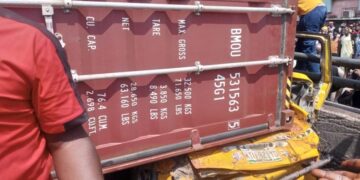
As part of broader reforms, the NADDC will also introduce mandatory pre export certification for all used vehicles imported into Nigeria from 2026. The measure is aimed at stopping the dumping of rusted and end of life vehicles into the country.
Osanipin said Nigeria is currently one of the few African countries without such certification requirements, making it attractive to exporters looking to dispose of unroadworthy vehicles.
He recounted a meeting with a foreign exporter who admitted shipping eight containers of end of life vehicles to Nigeria because it offered the “highest profit.”
“We will ensure that importers are held responsible so that whatever you are buying, you know what you are buying,” he said, adding that the cost of certification would be borne by exporters, not Nigerian consumers.
In another development, the NADDC disclosed plans to support the conversion of petrol and diesel vehicles to electric vehicles and compressed natural gas, in line with the National Automotive Industry Development Plan.
Osanipin said the council had already commenced extensive training programmes on electric vehicle technology, vehicle conversion, and alternative fuel systems for regulators and industry stakeholders.
“Capacity building is one of the major pillars of the NAIDP. We have carried out training on vehicle conversion from PMS and diesel to CNG, as well as on electric vehicles,” he said.
He added that National Occupational Standards for electric vehicle maintenance and CNG retrofitting had been developed, with structured certification programmes expected to begin by 2026.
Osanipin also revealed that Nigerian engineers and students were making progress in local vehicle design, including tricycles, buses, and electric campus shuttle buses developed in collaboration with 12 universities and private sector partners.
“We want what is taught in our institutions to reflect industry realities. Producing even a few world class auto engineers locally will have a significant impact on the economy,” he said.
He stressed that component manufacturing remains the biggest value driver in the automotive sector, noting that Nigeria spends more annually on tyres, brake pads, filters, and batteries than on importing complete vehicles.
According to him, the council is engaging stakeholders to resolve infrastructure, financing, and policy challenges facing component manufacturers, especially as Nigeria positions itself to benefit from the African Continental Free Trade Area.
Osanipin further disclosed plans to transform the National Automotive Industry Development Plan into an Act of Parliament, stating that a draft Auto Industry Bill would soon be presented to the National Assembly.
“Investment in the auto sector is huge. They will need an Act,” he said.
While acknowledging that some of the reforms may face resistance, he appealed to the media to help explain the policies to Nigerians, describing 2026 as a turning point for the transformation of Nigeria’s automotive industry.