



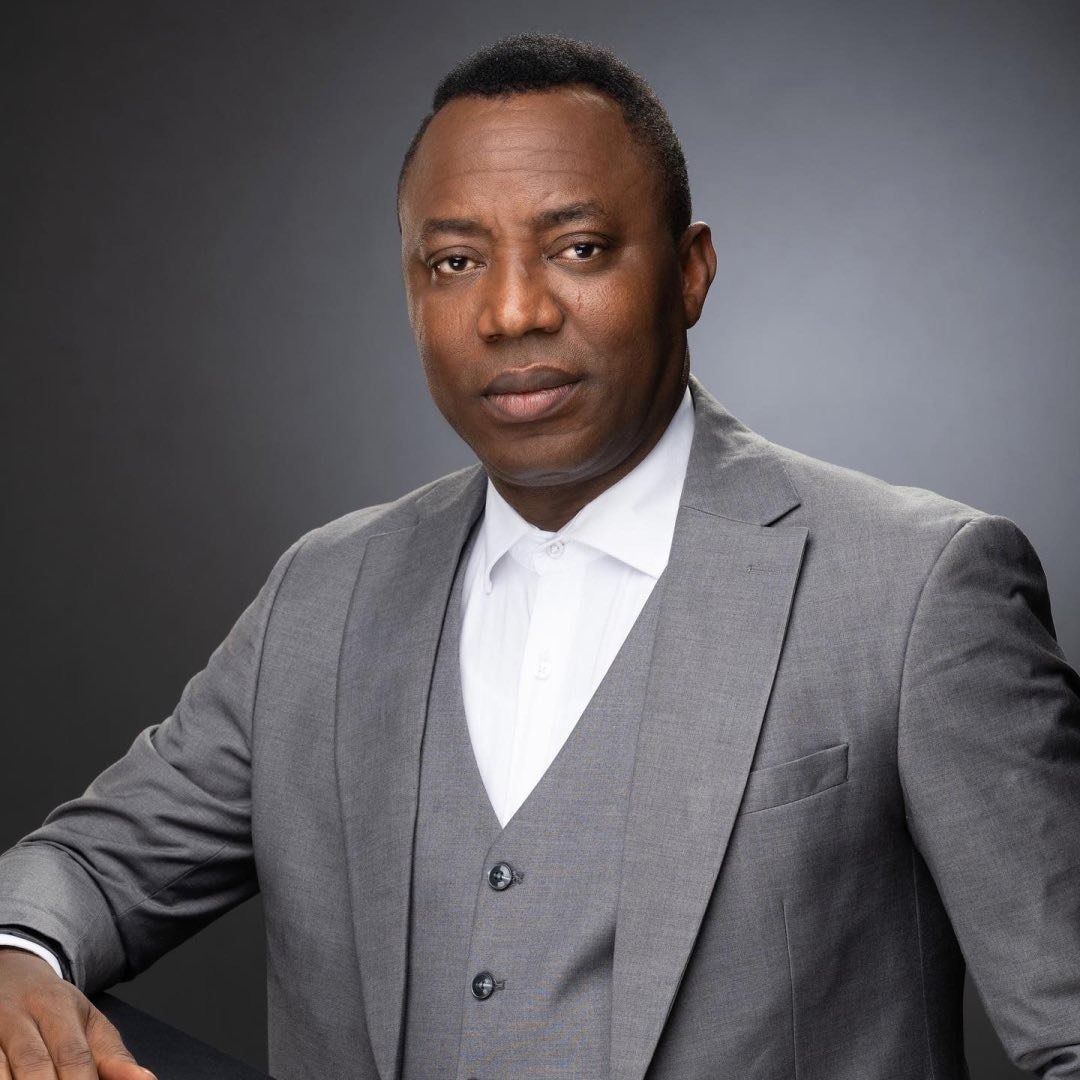
Omoyele Sowore has criticised the economic reforms of Bola Tinubu, insisting that the removal of fuel subsidy has left Nigerians poorer rather than improving their living conditions.
Sowore, a former presidential candidate of the African Action Congress, made this known during an interview on Frontline, a current affairs programme on Eagle 102.5 FM in Ilese Ijebu, Ogun State, on Thursday.
He argued that the policy, which the Federal Government said would free up funds for development and improve the economy, has instead worsened hardship across the country, with no visible gains for ordinary citizens.
“Well, the economic situation in the country is transparent to all of you. It’s not something that you need an expert analyst to tell you,” he said. “Like the government from day one of its inception mismanaged the Nigerian economy.”
Sowore pointed to the depreciation of the naira as a major indicator of what he described as economic mismanagement, noting that the currency has weakened significantly since the current administration assumed office.
“The strength of your currency is one of the ways you judge your economic relevance and your purchasing power. It went from 400 naira to a dollar, and now we are at 1,400 or 1,500,” he stated.
He further faulted the promises made by the government following the subsidy removal, saying they have not translated into improved infrastructure or better welfare for citizens.
“He removed what he called subsidy and told Nigerians that it would lead to more prosperity, that he would invest in roads, security and put more money in people’s pockets. Ask yourself, has that happened?” Sowore asked.
According to him, the policy has instead shifted the economic burden directly onto citizens, with households and small businesses struggling under rising costs of living.
He also accused the government of relying heavily on borrowing to fund its operations, including the payment of salaries, describing it as a sign of deeper economic challenges.
“They are borrowing money to pay salaries. They are borrowing money to do everything. The economy cannot even fulfil its obligations to its lawful budget,” he said.
Sowore added that several ministries now operate with little or no capital allocation, which he described as evidence of systemic failure.
He maintained that the current economic reality has left many Nigerians struggling to meet basic needs, with increasing levels of poverty and financial distress.
“There is no economy here anymore. People are just living from hand to mouth. A lot of people cannot even lift their hand to mouth anymore,” he said.
The activist also dismissed claims that subsidy removal was necessary to avert national bankruptcy, arguing that the country’s economic condition has worsened since the policy was implemented.
“It wasn’t necessary. Nigeria has gone bankrupt since the removal of subsidy. You cannot fulfil basic obligations,” he added.
Sowore further argued that while subsidy is meant to support vulnerable populations, it has been mismanaged in Nigeria through diversion and elite capture.
“The problem is not subsidy itself, but how funds meant for the people are diverted to a few individuals,” he said.
He questioned why subsidy removal focused mainly on petrol, noting that the decision has had far-reaching consequences on transportation, small businesses and general cost of living.
Sowore insisted that the policy has largely benefited a small elite, while worsening inequality, inflation and insecurity across the country.
“I ask again, who has benefited from the removal of subsidy? Apart from the one per cent who dominate the political and economic space,” he said.
He added that welfare systems exist globally in different forms, noting that governments in developed countries provide support through healthcare, education and social benefits.
“There is no country in the world that does not subsidise its citizens in one form or another,” he stated.
Responding to a caller who urged opposition parties to unite, Sowore rejected the idea of relying on political elites, arguing that meaningful change must come from the masses.
“There’s a vibrant population that can form a coalition of the oppressed. You don’t need your oppressors in another coalition,” he said.
He also dismissed claims that his activism scares political figures, saying resistance to his views stems from accountability concerns.
“I’m not scaring them away. They know based on my antecedents that we will not allow a system where only a few thrive,” he added.
Sowore maintained that subsidy removal has not benefited the wider population and insisted that economic policies should be judged by their impact on ordinary Nigerians rather than official projections.