



The Federal Government has intensified efforts to address Nigeria’s growing out-of-school children crisis by commencing the activation of completed but non-operational Smart, Bilingual and Alternative Schools across the country.
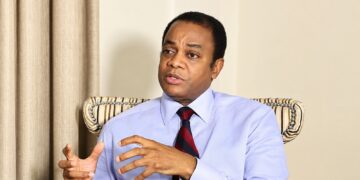
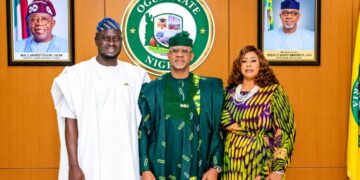
To drive the initiative, the Minister of Education, Tunji Alausa, on Tuesday inaugurated a ministerial implementation and monitoring committee in Abuja to ensure the facilities begin admitting learners and fulfil their intended purpose.
The initiative forms part of the Federal Government’s Renewed Hope Agenda aimed at expanding access to quality basic education and ensuring that investments in education infrastructure translate into improved learning outcomes.
Speaking at the inauguration, Alausa said the government would no longer tolerate a situation where completed school projects remained abandoned or failed to serve the children they were built for.
He said, “Infrastructure alone does not educate a child. A completed building without pupils is simply an empty structure. A furnished classroom without teachers remains an idle investment.”
The minister noted that although the Universal Basic Education Commission had invested heavily in Smart, Bilingual and Alternative Schools, implementation gaps had prevented many of the projects from achieving their objectives.
According to him, the newly inaugurated committee will supervise the transition of the schools from completed infrastructure to fully operational learning centres through the completion of outstanding works, handover, staffing, enrolment of pupils and continuous monitoring.
“Every day a completed school remains locked represents lost opportunities for thousands of Nigerian children,” Alausa said.
He added that the success of the committee would not be judged by the number of reports submitted but by the number of schools actively providing education.
“Success will not be measured by the number of reports submitted, but by how many schools are actually teaching Nigerian children,” he said.
Under the initiative, the committee will collaborate with state governments, State Universal Basic Education Boards and other stakeholders to ensure the schools are equipped with furniture, learning materials and essential facilities such as electricity, water supply and internet connectivity. It will also facilitate the deployment of teachers and the enrolment of pupils.
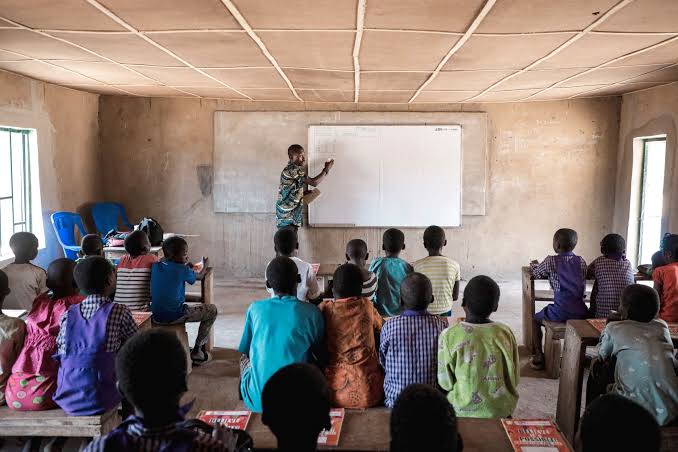
The Smart Schools programme was introduced by the Universal Basic Education Commission to modernise basic education through technology-driven learning, while Bilingual Schools promote multilingual instruction and Alternative Schools provide flexible learning opportunities for out-of-school children, girls, street-connected children and other vulnerable groups.
Despite the investments, many of the facilities have remained underutilised because of delayed handover, inadequate staffing and slow operationalisation in some states.
Describing the situation as unacceptable, the minister stressed that public investment in education must produce measurable results.
“Every classroom will count. Every school will function. Every investment will deliver value,” he declared.
Nigeria has one of the world’s largest populations of out-of-school children, with millions of school-age children, particularly in rural and conflict-affected communities, still lacking access to formal education.
Alausa directed the committee to immediately begin engagements with UBEC, state governments, contractors and other relevant stakeholders to accelerate the operationalisation of the schools nationwide.