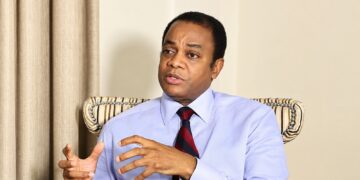




The Minister of Education, Dr Olatunji Alausa, has said President Bola Ahmed Tinubu has fulfilled almost 100 per cent of the promises contained in his 2023 presidential campaign manifesto.
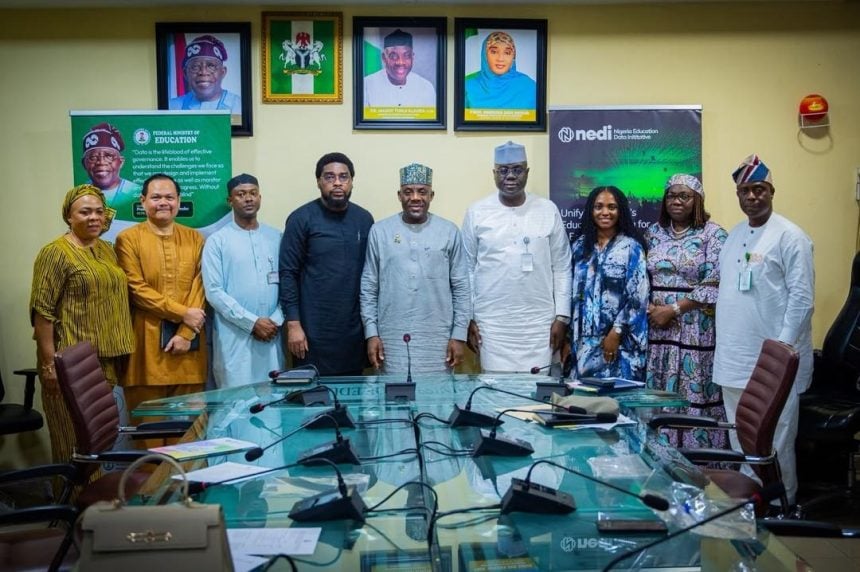
Alausa made the declaration in Abuja at the weekend while receiving the outcomes of the 2025 Nigeria 2050: Child Foresight Analysis for Futures Literacy and Intergenerational Equity, a flagship initiative of the Anticipatory Governance and Foresight Capacity Programme of the Office of the Vice President, implemented with technical support from the United Nations Children’s Fund.
According to the minister, the country has moved beyond the uncertainty that previously characterised national development, with the administration now recording tangible reforms and changes across different sectors.
“These are not just rhetorics we are hearing now. These are things we are seeing, with a lot of tangible benefits and tangible change in the country,” Alausa said.
He said the progress recorded under the administration was particularly evident in the education sector, where the Federal Ministry of Education is implementing reforms under the Renewed Hope Agenda.
Alausa said the Nigerian Education Sector Renewal Initiative was driving reforms in technical and vocational education and training, STEM education, teacher quality, quality assurance, reduction of out-of-school children, education data and digitalisation.
He also said the Federal Government was expanding access to medical education and professional training to address shortages of nurses and other health professionals, adding that existing teaching hospitals, federal medical centres and specialist hospitals were being used to increase training capacity.
On the controversial estimates of Nigeria’s out-of-school children, the minister said the government had adopted a data-driven approach to determine the actual number of affected children.
He questioned estimates putting the figure between 15 million and 17 million, saying recent household surveys in some states had produced significantly lower figures.
Alausa cited Kaduna State, where a household survey covering more than 90 per cent of households reportedly recorded fewer than 190,000 out-of-school children, compared with an earlier estimate of about 585,000.
He said more than one million children had been moved from the streets into schools nationwide over the past two and a half years, while Jigawa State alone had reportedly enrolled more than 180,000 children within two years.
The minister, however, said the priority remained ensuring that children remained in school and preventing fresh cases of school exclusion.
“Even if there’s significant reduction, any child out of school is still too many,” he said.
Alausa further disclosed that more than 56 per cent of public schools and 41 per cent of private schools had submitted their 2026 Annual School Census information through the digitised Nigerian Education Management Information System.
He said accurate education data would enable the government to identify gaps, plan infrastructure, target interventions and measure the impact of reforms.