
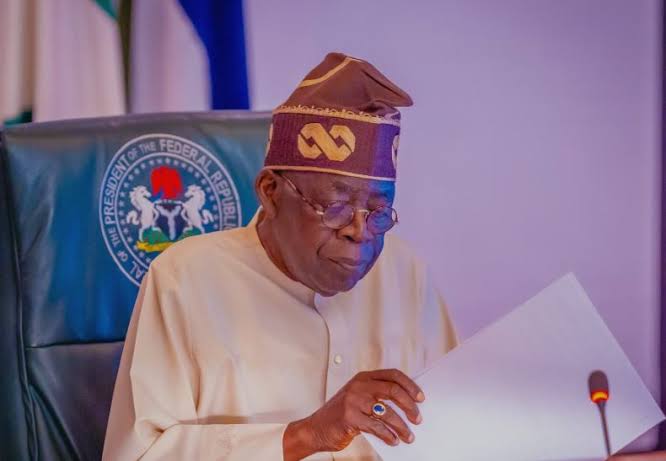
Tinubu has called on African nations to take full ownership of their mineral resources and assert greater control over global supply chains, saying the time has come for the continent to stop exporting raw materials and start producing finished goods.
Represented by Vice President Kashim Shettima at the Second Africa Minerals Strategy Group (AMSG) High-Level Roundtable on Critical Minerals Development in Africa, Tinubu made the call during a session held on the sidelines of the 80th United Nations General Assembly in New York.
He said the era of depending on foreign capital to develop Africa’s mineral wealth must end, urging countries to jointly finance and manage their mineral economies.
“We must take the bull by the horns in financing our future. Never again shall we wait for capital to trickle in. With sovereign funds, blended vehicles, and innovative tools like the Africa Mineral Token, Africa shall finance Africa,” Tinubu said.
He explained that controlling the mineral value chain was essential to safeguarding the continent’s sovereignty, stressing that Africa must act as one united bloc to gain influence in global markets.
“To safeguard this sovereignty, we must guard our cobalt, lithium, graphite, gold, and rare earths not as fragmented states but as one continental bloc, wielding collective power in global supply chains,” he said.
Tinubu outlined four key imperatives for unlocking Africa’s mineral economy — value addition, data ownership, exploration, and continental cooperation.
He said African nations must move beyond exporting raw resources and embrace local beneficiation and green manufacturing to create jobs and wealth.
“We must end the ignoble cycle of exporting rocks and importing finished goods. From beneficiation to green manufacturing, Africa must build industries on African soil,” he added.
Tinubu announced the establishment of the African Minerals and Energy Resource Classification (AMREC) and the Pan-African Resource Reporting Code (PARC), describing them as tools for reclaiming control over Africa’s geological data.
“We will no longer beg for geological knowledge of our own land. Africa’s data will be mapped, standardised, and owned by Africans,” he said.
He also urged governments to intensify national geological mapping and exploration, warning that “without exploration, there is no sovereignty, and without mapping, there is no value.”
Tinubu applauded several African countries, including Nigeria, Zimbabwe, Gabon, and Kenya, for their bold steps in restricting raw mineral exports to encourage domestic processing.
“Zimbabwe’s ban on raw lithium in 2022, Gabon’s decision to end manganese exports by 2029, and Kenya’s plan to restrict raw gold exports are historic acts of courage,” he said.
He commended Nigeria’s Minister of Solid Minerals Development, Dr Dele Alake, who chaired the event, for leading the continent toward a mineral-led industrial renaissance.
In his remarks, Dr Alake urged unity among African nations, noting that cohesion and transparency in the mineral sector were vital for sustainable growth.
Also speaking, UN Assistant Secretary-General and Regional Director for Africa at the UNDP, Ahunna Eziakonwa, advised African leaders to prevent external exploitation and ensure mineral wealth benefits citizens through technology transfer and job creation.
“There is a scramble and a lot of interest in Africa’s minerals. People are coming to partner. Africa can shape the quantum of that partnership and determine what works from it,” she said.
European Union Commissioner for International Partnerships, Jozef Stkela, said the EU had adopted the Critical Raw Materials Act to diversify its mineral supply, with four of its 14 strategic partnerships already in Africa.
Meanwhile, Shettima also held a roundtable with investors under the Business Council for International Understanding in partnership with the Flour Mills of Nigeria and other conglomerates.
He highlighted Nigeria’s economic reforms and invited global investors to take advantage of the country’s improving business climate.
“President Tinubu remains a reliable ally and partner. He understands the global business environment, and the Nigerian economy has turned the corner under his reforms,” Shettima said.