



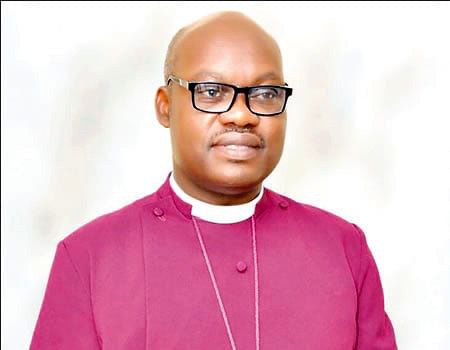
The Anglican Bishop of Owo Diocese, Stephen Ayodeji A. Fagbemi, has called on the Nigerian government to confront what he described as a disturbing pattern of attacks on churches and Christian communities in parts of the country.
Fagbemi made the call on Monday during an appearance on Frontline, a public and current affairs programme on Eagle 102.5 FM Ilese‑Ijebu in Ogun State, where he spoke on the growing security concerns affecting religious communities across Nigeria.
The cleric said repeated assaults on worship centres and killings of congregants, particularly in the Middle Belt and northern regions, have raised serious questions that authorities must address urgently.
“Over the years, the violence against Christians, including attacks on churches, kidnappings and killings, has drawn the attention of international bodies because the pattern is consistent,” Fagbemi said.
“This is not a series of isolated incidents. When places of worship, pastors and congregations are attacked repeatedly, it raises serious questions about motives, choices of targets and the inability of authorities to protect communities,” he added.
The bishop also referred to international concerns about religious freedom in Nigeria, noting that in October 2025 the United States designated Nigeria as a Country of Particular Concern under the International Religious Freedom Act over alleged violations of religious freedom.
According to him, the designation should not be treated lightly but rather seen as a signal for deeper reflection and policy response.
“When international partners like the United States designate our country as a place of particular concern over religious freedom, it is not a trivial matter. It reflects documented trends and testimonies from victims, their families and observers on the ground,” he said.
Fagbemi also recalled the tragic attack on St. Francis Catholic Church Owo in 2022, which left dozens of worshippers dead and many others injured.
“It was Pentecost Sunday and our hearts will never forget the screams and the terror that day. We were only about 400 metres away, yet the sounds of violence reached us clearly,” he said.
“People were calling loved ones, fleeing, hiding and crying for help. A community was left in shock,” the bishop added, stressing that the psychological impact of the attack remains strong among residents and worshippers in the area.
Despite his concerns, the bishop noted that insecurity in Nigeria affects people of different religious backgrounds.
“Insecurity affects every Nigerian, Muslim, Christian and traditional religion adherent. It does not discriminate when bandits or kidnappers strike,” he said.
“But when Christian centres of worship are repeatedly attacked in specific regions with little effective intervention, it is valid to ask why,” he added.
He said government at all levels has the constitutional duty to protect citizens and ensure that Nigerians can practise their faith freely without fear of violence.
“The government has the primary responsibility to protect lives and property. When international bodies sound alarms, it should motivate us to improve protection, not create division,” he said.
Fagbemi also urged authorities to address the root causes of violence and strengthen security institutions to prevent further attacks.
“Security challenges will not be solved by finger pointing alone. We must inspect our institutions, empower our security forces and ensure that every Nigerian, regardless of faith, can live and worship safely,” he said.
He concluded by calling for national unity and decisive action to end violence against communities.
“Let this moment be a call to renew our commitment to justice, protection and unity,” the bishop said.