



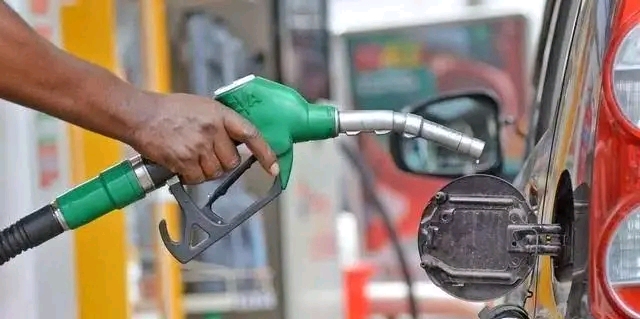
The Federal Government has disclosed that Nigeria’s local petrol production has increased from virtually zero in 2023 to about 48 million litres per day, marking a significant shift in the country’s downstream petroleum sector.
The Special Adviser to the President on Oil and Gas, Mrs Olu Verheijen, made the disclosure during the Nigerian-British Chamber of Commerce Energy Day 2026, held recently in Lagos.
Speaking on the theme, “Energy in Nigeria: From Potential to Reality,” Verheijen said that for the first time in a generation, the majority of the petrol consumed by Nigerians is now refined locally.
She noted that the development had substantially reduced the country’s dependence on imported fuel and eased pressure on foreign exchange.
According to her, petrol imports declined from about N2.3tn in the first quarter of 2025 to less than N90bn in the corresponding period of 2026.
“This is where energy reform meets the strength of the naira.
“For decades, every cargo of imported petrol was a standing demand for scarce dollars, a structural drain that weakened our currency.
“As local refining has risen, that drain has eased. Fewer dollars spent on fuel means less pressure on the naira. Energy security and currency stability are not separate goals. They are the same goal,” she said.
Verheijen also stated that Nigeria’s crude oil and condensate production averaged 1.64 million barrels per day in 2025, representing an increase of about 400,000 barrels per day from 2023 levels.
She added that the country had restored investor confidence, with over $4bn worth of international oil company divestments successfully concluded.
According to her, the divestments have deepened indigenous participation in onshore operations while international oil majors refocus on deep-water and integrated gas projects.
“Pipeline uptime is now consistently high, and illegal refining has been sharply reduced. Every additional barrel matters, for revenue, for jobs, and for the strength of the federation,” she added.
Reflecting on the state of the sector when the current administration assumed office in 2023, Verheijen said the oil and gas industry was under severe strain, with fuel subsidies becoming fiscally unsustainable and foreign exchange distortions discouraging investment.
She said the Tinubu administration responded by removing fuel subsidies and implementing foreign exchange reforms aimed at restoring fiscal credibility.
“The decisions were hard, but necessary. The results are visible. Total federation revenue rose to about N21tn in 2024, up from roughly N12tn in 2023, nearly doubling in a single year,” she said.
She further noted that despite the deregulation of the downstream sector, the government had prevented the persistent nationwide fuel queues that previously characterised periods of scarcity.