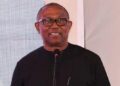


Presidential candidate of the Nigeria Democratic Congress (NDC), Peter Obi, has promised to return Nigerian youths to farming and small-scale businesses if elected president in 2027.
Obi made the pledge on Saturday in Kaduna during a political gathering organised by the NDC, where he addressed supporters alongside his running mate, Rabiu Kwankwaso.
The former Anambra State governor said an NDC administration would pursue an inclusive government anchored on national unity, investment and increased production, with a focus on creating employment opportunities for young Nigerians.
According to him, Nigeria must move away from borrowing for consumption and channel borrowed funds towards productive investments capable of creating jobs and stimulating economic growth.
“If you elect us to serve, we will only borrow money for investment,” Obi said.
“We’re no longer going to borrow money for consumption. We want to move Nigeria from consumption to production. By that, we will create jobs.”
Obi compared Nigeria’s economic situation with that of Indonesia, noting that although Indonesia has a larger population, its youths are more engaged in productive activities.
He said his administration, if elected, would support young Nigerians to return to agriculture and small businesses as part of measures to address unemployment.
“We will help the youths to find something to do. We will make sure they go back to farm.
“We will make sure they go back to small businesses. We will support them and tell them the bad effects of drugs,” he said.
Obi also expressed concern over drug abuse in the country, attributing part of the problem to youth unemployment.
He said Nigeria needed stronger legislation against the importation and distribution of illicit drugs, promising tougher punishment for those involved in the trade if elected.
“Nigeria does not have adequate laws for those who are importing drugs,” he said.
“If I become president, drugs will fetch life sentence. If you deal in drugs that will kill our youths and everything, you are going to face life imprisonment. We cannot take it.”
Obi further cited a figure of 14 per cent for drug prevalence in Nigeria, compared with what he described as a global rate of about five per cent, arguing that the situation required urgent intervention.