



– Alhaji Korede Quadri (KQ), FCIB
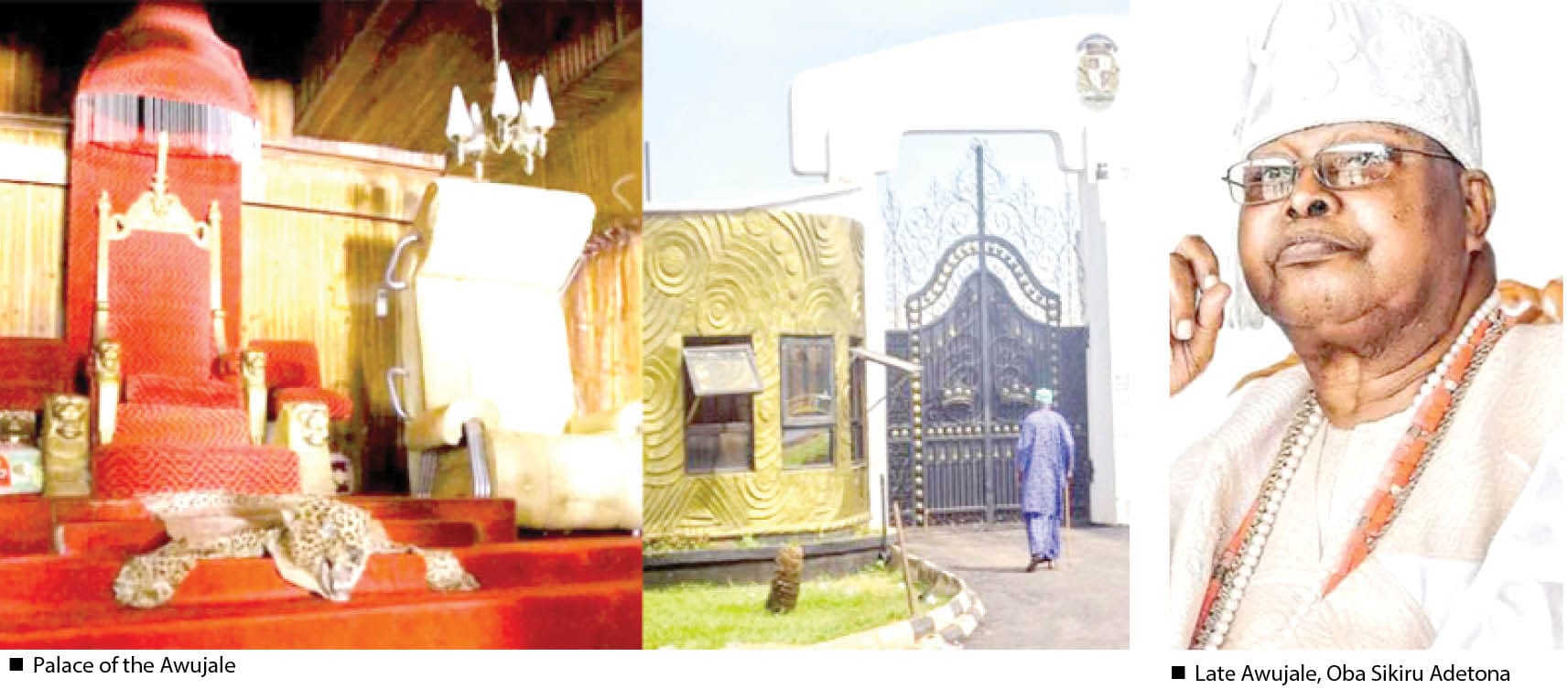
The Awujale stool remains one of the most revered traditional institutions in the South West of Nigeria, commanding respect, history and deep cultural significance. It is not a stool that can be trivialised or diminished by sentiment, influence or material considerations. Rather, it is a sacred institution that must continually be treated with the seriousness it deserves, rooted firmly in the customs and traditions of Ijebu-Ode in Ijebuland.
In moments of transition, such as the one Ijebu-Ode currently faces, it becomes even more important to reflect on the enduring values that have sustained the institution over time. These values include integrity, adherence to tradition, and an unwavering commitment to due process. Without these, the sanctity of the stool risks erosion.
One significant figure whose role cannot be overlooked in this delicate period is the Ogbeni-Oja, Chief Dr. Sunny Kuku. His appointment is one that many across Ijebu Ode and the wider Ijebuland regard with pride. He is widely seen as a man grounded in knowledge, experienced in leadership, and deeply aware of the cultural expectations tied to the Awujale institution.
It is important to acknowledge the foresight of the late Awujale, Oba Sikiru Kayode Adetona, in appointing Chief Sunny Kuku to this pivotal position. That decision continues to resonate, especially at a time when guidance, wisdom and firmness are required to navigate the process of selecting a new Awujale.
Chief Sunny Kuku stands out as a man of substance, one whose integrity is not easily swayed by wealth, position or public pressure. This is crucial in a time where traditional institutions in some quarters have faced the temptation of commercialization. His reputation offers reassurance that the process in Ijebuland can remain credible and transparent.
There is a widely held belief that before his passing, the late Awujale would have emphasized the importance of following established tradition. Central to this is the understanding that the next Awujale should emerge from the Fusegunwa ruling house, in accordance with the rotational arrangement already accepted by stakeholders in Ijebuland and recognized by the government.
Equally important is the insistence that the throne must not become an avenue for the highest bidder. The dignity of the Awujale stool demands that it must never be reduced to a transactional position. It is a sacred trust, not a commodity.
History provides a compelling example that should guide present decisions. When Oba Adetona himself was to be installed, he was neither wealthy nor widely known. Yet, men of principle and foresight ensured that tradition prevailed over material considerations.
Among those who played a crucial role were the late Ogeni Oja, Chief Timothy Adeola Odutola, Chief Sonibare, and Chief Obafemi Awolowo. These individuals went as far as England to bring the young Adetona back to Nigeria, ensuring that due process was followed and that tradition was upheld.
Their actions remain a defining moment in the history of Ijebuland. They could have compromised, they could have prioritized wealth or influence, but they chose the path of honour. That decision gave Ijebuland a monarch whose reign spanned decades and left an indelible mark on the land.
Today, Chief Sunny Kuku stands at a similar crossroads. The opportunity before him is not just administrative, it is historical. By ensuring that due process is followed without compromise, he has the chance to etch his name permanently in the annals of Ijebu-Ode as a custodian of integrity.
It is necessary at this point to draw a clear distinction between religion and tradition. While both play important roles in society, they operate in different spheres. Tradition and culture define the identity and continuity of a people, while religion is a matter of personal faith.
This distinction was clearly demonstrated in the past. The key figures who facilitated the emergence of Oba Adetona were devout Christians, yet they upheld traditional processes that eventually produced a Muslim king. Their actions reflected a deep understanding that cultural heritage must be preserved irrespective of personal religious leanings.
This same principle is evident in other traditional institutions such as those in Benin and Ile-Ife, where adherence to culture and tradition remains paramount. These examples reinforce the need for Ijebu-Ode to remain steadfast in its own practices.
A critical aspect of the current situation is the role of the Fusegunwa ruling house. As the next in line, the responsibility lies heavily on them to conduct a credible and transparent selection process. Unfortunately, concerns have emerged regarding the initial screening process, particularly the presentation of an unusually large number of candidates.
The emergence of about 95 names raises legitimate questions about the thoroughness and fairness of the screening exercise. It suggests that the process may not have been handled with the level of diligence expected, possibly due to personal interests or lack of proper coordination.
Given the importance of the situation, there is a strong case for a reset. The process should return to the Fusegunwa family, but this time under careful supervision to ensure that all guidelines are strictly followed. This is where the leadership of Chief Sunny Kuku becomes indispensable.
He is in a position to guide the process, ensuring that it is free, fair and consistent with tradition. His involvement can help restore confidence and prevent further controversies that may undermine the integrity of the selection.
Another crucial element that must not be overlooked is consultation with the oracle, in line with established customs. Traditional institutions derive their legitimacy not just from human decisions but from spiritual validation that aligns with cultural beliefs.
Allowing traditionalists to carry out their roles without interference is essential. Their input is not merely symbolic, it is foundational to the authenticity of the process. Any attempt to sideline this aspect risks weakening the cultural fabric that sustains the institution.
There is also a need to avoid unnecessary haste. The selection of an Awujale is not an ordinary appointment. It requires patience, thoroughness and a commitment to getting it right. Rushing the process could lead to errors that may have long-term consequences.
One of the most significant risks to avoid is litigation. Across various communities, disputes over traditional stools have often ended up in courts, creating divisions and prolonging uncertainty. Ijebu-Ode must guard against such outcomes by ensuring that every step of the process is transparent and widely accepted.
Ultimately, the strength of the Awujale stool lies in its history, its traditions and the collective will of the people to preserve it. This is not just about selecting a king, it is about safeguarding a legacy that has endured for generations.
Chief Sunny Kuku now has a rare opportunity to reinforce that legacy. By standing firm on principles of fairness, integrity and respect for tradition, he can help ensure that the next Awujale emerges through a process that commands respect both within Ijebu-Ode and beyond Ijebuland.
History will judge this moment. It will remember those who chose convenience over principle, and those who stood for what is right. For Ijebu-Ode, the path is clear. Tradition must prevail, integrity must lead, and the Awujale stool must remain the symbol of honour it has always been.
Written by:
Alhaji Korede Quadri (KQ), FCIB
Concerned Indigene of Ijebu-Ode