



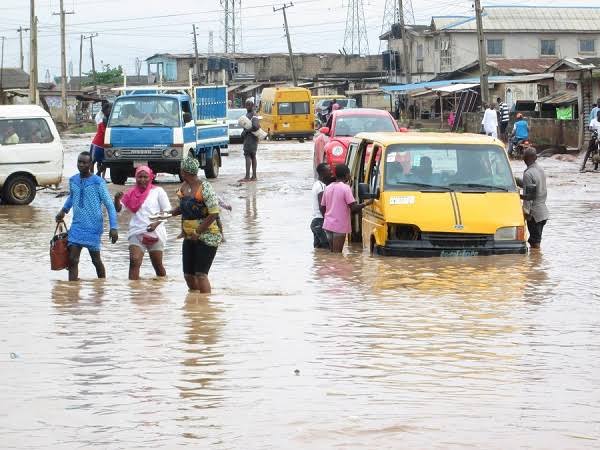
The Nigerian Meteorological Agency has warned that Lagos, Ogun and 25 other states may experience flash flooding between July 1 and July 10 as the country enters the peak of the rainy season.
In its flood risk advisory for the first dekad of July, the agency said widespread rainfall recorded across the country in June had left soils heavily saturated, increasing the likelihood of flash floods, particularly in low lying, urban, coastal and poorly drained areas.
NiMet explained that the persistent rainfall had significantly reduced the capacity of the soil to absorb additional water, thereby heightening the risk of flooding.
The agency listed the affected states as Taraba, Sokoto, Borno, Zamfara, Kebbi, Katsina, Kaduna, Nasarawa, Plateau, Adamawa, Kwara, Kogi, Oyo, Ogun, Lagos, Osun, Ekiti, Delta, Edo, Abia, Imo, Anambra, Enugu, Akwa Ibom, Cross River, Rivers and Bayelsa.
It warned that the expected heavy rainfall could disrupt transportation, damage infrastructure, affect agriculture and pose health risks.
According to NiMet, flooding may lead to traffic gridlock, road closures and interruptions to transportation services, while temporary power and telecommunications outages could occur in affected areas.
The agency also cautioned that poor visibility during heavy rainfall could pose risks to motorists and aviation operations.
It further warned that waterlogged farmlands could result in crop losses, while roads, bridges, drainage systems and other public infrastructure could suffer damage.
NiMet also expressed concern over the increased risk of waterborne diseases associated with stagnant floodwaters and poor sanitation, urging health authorities to remain vigilant.
To minimise the impact of the expected floods, the agency advised residents to monitor weather forecasts and flash flood alerts, clear drains and waterways of refuse, secure loose outdoor objects and avoid walking or driving through floodwaters.
It also called on the National Emergency Management Agency, State Emergency Management Agencies, community leaders and other relevant stakeholders to strengthen preparedness and emergency response measures.
The agency stressed that early planning and prompt action remain critical to reducing the impact of flash floods, urging Nigerians to remain vigilant throughout the period.