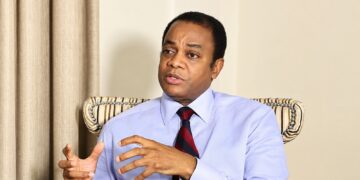




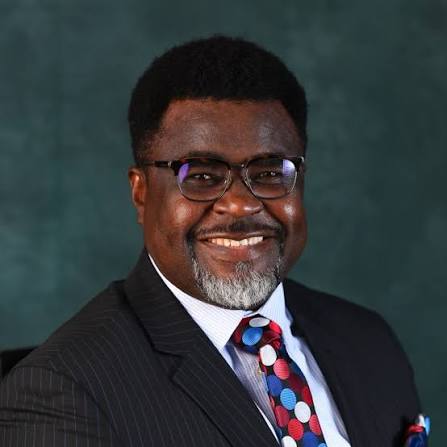
A legal practitioner, rights advocate and public policy analyst, Liborous Oshoma, has said the Federal Government cannot lawfully implement the proposed reforms to the National Youth Service Corps without first amending the Act establishing the scheme.
Oshoma stated this on Monday during an interview on Frontline, a current affairs programme on Eagle 102.5 FM, Ilese-Ijebu, Ogun State, while reacting to the Federal Government’s recently approved reforms for the 53-year-old scheme.
The reforms, approved by President Bola Tinubu after the June 30 meeting of the Federal Executive Council, include extending the NYSC orientation course from three weeks to six weeks and introducing 11 specialised service streams aimed at equipping corps members with practical and career-oriented skills.
Reacting to the development, Oshoma said although reforms were necessary to strengthen the scheme, the government must comply with constitutional and legislative procedures because the NYSC is a creation of an Act of the National Assembly.
He said, “First and foremost, the NYSC is a creation of law. Certainly, if you want to reform, the reform should also take the position of a law amendment.”
The legal practitioner maintained that executive approval alone could not alter statutory provisions governing the scheme.
He added, “Certainly the Federal Government cannot introduce reforms to the NYSC unilaterally without amending the Act.”
According to him, while the government may introduce administrative adjustments that do not conflict with existing legislation, any reform affecting provisions expressly contained in the law must receive legislative approval.
Using the appointment of the NYSC Director-General as an example, Oshoma explained that if the law prescribes that the office should be occupied by a serving military officer, the government cannot appoint a civilian without first amending the Act.
He said, “If the Act says there shall be a Director-General who shall be a serving military officer, you cannot appoint a lawyer or a politician to that office without amending that provision in the Act. Certainly, you must amend the Act to bring about robust and meaningful reforms.”
Oshoma also urged the Federal Government to engage stakeholders before transmitting any amendment bill to the National Assembly.
According to him, consultations should involve universities, serving corps members, youth groups and other stakeholders whose lives would be directly affected by the reforms.
He said, “Before you bring the reforms and amendments, you first and foremost have to do what we call collaborative stakeholders’ discussions. I want to believe these discussions are taking place and that, at the end of the day, the reforms will take the shape of an amendment.”
The lawyer further called on members of the National Assembly to begin consultations with their constituents to obtain public input on the proposed changes.
He argued that young Nigerians, who are the primary beneficiaries of the scheme, should not be excluded from discussions about its future.
“You can’t create something for young people without hearing what they think about the programme. That’s where the discussion needs to start from,” he said.
Oshoma also attributed the public scepticism surrounding the reforms to what he described as a trust deficit between the government and citizens.
He said, “The challenge we have most times as a people is because of trust deficit in government. Even though we clamour for reforms, the moment government initiates these reforms, we become suspicious because there is no trust in the process.”
Despite the concerns, he insisted that the NYSC remains relevant and should be strengthened through continuous reforms rather than abolished.
According to him, the scheme has contributed significantly to national integration while creating employment opportunities for many graduates.
“NYSC is a fantastic programme that needs consistent reform. There are people who got jobs through NYSC and others whose experiences during service shaped their careers. It is not all doom,” Oshoma said.
Speaking on the proposal to replace the NYSC’s traditional khaki uniform with locally produced fabrics, Oshoma urged Nigerians to focus on the economic gains rather than ethnic considerations.
He argued that increased patronage of indigenous textiles could revive Nigeria’s struggling textile industry and create jobs.
“Let’s look at the economics of it and remove the issue of tribalism, culture and sentiments. The economics of it is what will promote us and take us to the promised land, not where the fabric is coming from,” he said.
He also questioned the continued importation of materials used for NYSC uniforms, saying government institutions should prioritise locally made products to stimulate domestic manufacturing and reduce dependence on foreign textiles.