

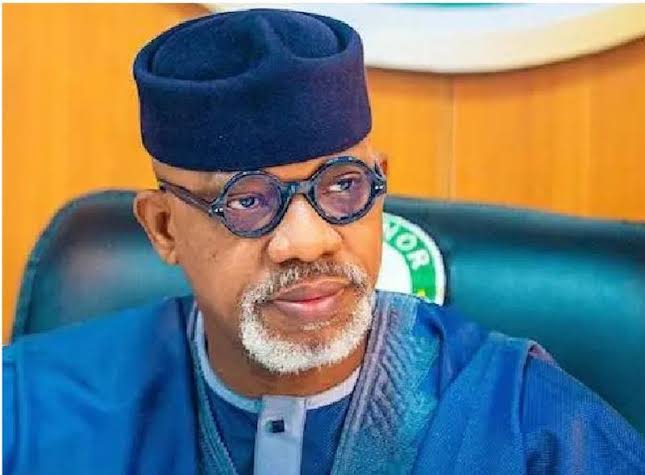

Ogun State Governor, Prince Dapo Abiodun, has called for stronger collaboration between faith-based organizations, the private sector, wealthy individuals, and government to break the cycle of poverty in Nigeria.
Abiodun made the call on Wednesday at the 12th Annual Public Lecture of the Foursquare Gospel Church, themed “Poverty Alleviation, Economic Development, and Stability of the Nigerian Economy”, held in Lagos to mark the church’s 70th anniversary.
According to the governor, poverty alleviation is not a task the government can shoulder alone, stressing that all stakeholders must play their part.
“As leaders, whether in government, the church, or the private sector, we must collaborate to break this cycle. Poverty is not just an economic statistic; it is a human reality.”
“Faith-based organizations, private sector players, and community leaders must join hands with us to provide education, vocational training, mentorship, and micro-financing. This collaboration not only uplifts individuals but also strengthens communities,” Abiodun said.
Abiodun noted that the church has a crucial role to play in strengthening Nigeria’s moral capital through discipline, stewardship, and accountability, which are essential for sustainable development.
The governor also highlighted his administration’s ongoing efforts in empowering women, farmers, and youths, as well as providing free healthcare services to vulnerable groups.
On his part, the General Overseer of the Foursquare Gospel Church, Pastor Sam Aboyeji, praised Abiodun’s commitment to socio-economic development in Ogun State, saying his investments in infrastructure, education, agriculture, and poverty alleviation have lifted the state to a higher pedestal.
Guest lecturer and former Economic Adviser to the late President Muhammadu Buhari, Dr. Doyin Salami, warned that Nigeria must embrace hard reforms to stimulate genuine economic growth.
He said, “Nigeria and China were once on the same level of development, but while the Chinese have made significant progress in the last three decades, we are still battling the same challenges. Soft reforms will not deliver results. Nigeria needs bold, hard reforms.”
Dr. Salami also proposed a seven-year tenure for elective officials, arguing that the current arrangement does not give leaders enough time to effectively address the country’s challenges.