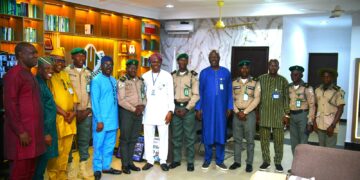


Burkina Faso has released 11 Nigerian military personnel who were detained following the emergency landing of a Nigerian Air Force C-130 aircraft in Bobo-Dioulasso, the country’s second-largest city. Authorities described the landing as “unauthorised.”
The Association of Sahel States (AES) said the aircraft entered Burkina Faso’s airspace without clearance, calling the incident an “unfriendly act.”
The release included two crew members and nine passengers, though it remains unclear whether the aircraft itself has been cleared to depart.
The Nigerian Air Force explained that the plane experienced a technical issue and made the stop in line with standard safety procedures and international aviation protocols while en route to Portugal on a ferry mission.
Ehimen Ejodame, the NAF spokesperson, confirmed that an investigation is ongoing and assured that the personnel were treated well by Burkinabè authorities, adding that the mission would continue.
The incident has drawn regional attention as it came a day after Nigerian airstrikes targeted a military camp in neighbouring Benin, where personnel allegedly linked to a recent attempted coup were hiding.
Omar Touray, President of the ECOWAS Commission, said the region is facing heightened instability.
“Events of the last few weeks have shown the imperative of serious introspection on the future of our democracy and the urgent need to invest in the security of our community,” he told the bloc’s mediation and security council in Abuja.
Meanwhile, the Nigerian Minister of Defence, Gen. Christopher Musa (rtd), commended the Armed Forces for their swift response during the attempted coup in Benin.
Speaking in Abuja at a ceremony for newly promoted senior officers, Musa said: “Your prompt action helped ensure that the coup failed. This is the standard Nigerians expect, and you must always be ready 24/7 to respond to threats against our nation or our allies.”
He urged continuous readiness and stronger cooperation across all branches of the military, emphasizing that “jointness and inter-service cooperation are indispensable.”