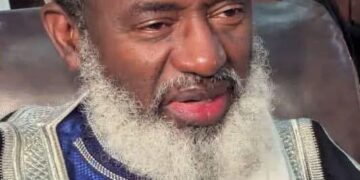




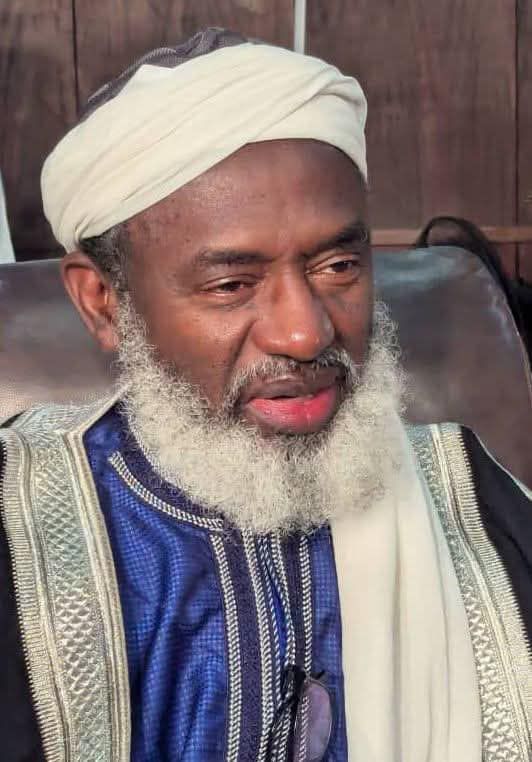
Prominent Islamic scholar, Sheikh Ahmad Gumi, has denied allegations of supporting armed groups in northern Nigeria, insisting that his engagement is strictly humanitarian and focused on conflict resolution.
His comments come amid calls for his arrest as insecurity across the region intensifies, forcing school closures and renewed government security interventions.
Speaking on Monday during an exclusive interview on Frontline on Eagle 102.5 FM, Ilese-Ijebu, Gumi described himself as a peacemaker. “I am absolutely a peacemaker. I don’t want bloodshed. Nigerians forget that our military men are dying too. We recently lost a Brigadier General because of a stalemate with Boko Haram. These terrorists are supported by international interest groups. We are not fighting a ragtag group; we are fighting an international network,” he said.
He explained that many armed herders lack platforms to express grievances, which sometimes leads to violent confrontations. “It is like a doctor explaining an illness. People accuse the doctor of supporting the sickness. Understanding their side is the only way to propose a cure,” Gumi added.
The cleric dismissed claims that Nigeria is experiencing a religious war, calling the narrative misleading. He also downplayed foreign commentary on the country’s insecurity, particularly statements credited to former US President Donald Trump. “Trump is not to be taken seriously.
He accused Nigeria before any investigation. America is after oil, both ours and Venezuela’s. Nigerians should not be excited about foreign interference,” Gumi said.
Addressing his controversial visits to bandit camps, Gumi clarified that his actions were conducted with the knowledge of government authorities. “I was invited by the Zamfara State Government to help negotiate peace. We went with police, officials and the press. We sat with them only to hear their grievances,” he said, defending tactical military withdrawals during some attacks as measures to avoid unnecessary deaths.
Gumi proposed a structured amnesty programme for herders, akin to the Niger Delta model, as well as phased ranching with government support. He warned against foreign military involvement, noting that the herder crisis is local and must be resolved internally.
He reiterated that his efforts are not financially motivated. “If I wanted money, I would join politics. I was a military captain. I am a medical doctor. I am not jobless and I do not need money from this,” he said.