





The Ogun State Commissioner for Sports Development, Hon. Wasiu Isiaka, last week organized a special Ramadan prayer and Iftar lecture in Imeko-Afon to honor his late parents, Prince Tijani Ade Isiaka and Alhaja Kuburat Isiaka.
The event also featured prayers for the continued success of Governor Dapo Abiodun’s administration and his senatorial ambition in 2027.
In his welcome address, Isiaka described the memorial lecture as both timely and necessary, particularly in view of the current socio-political realities in the country.
He explained that the gathering was meant not only to honor the memory of his parents but also to seek divine guidance for effective governance in the state.
He stressed the need to integrate spiritual and moral values into leadership, noting that such principles could help address persistent societal challenges and foster unity within communities.
Delivering the Ramadan lecture, Islamic scholar Shuaeb Adegbite urged political office holders to embrace prophetic teachings as a foundation for governance.
“Politics guided by ethical and spiritual values can serve as a powerful tool for promoting peace, justice, and sustainable development,” Adegbite said.
He emphasized that leadership qualities such as accountability, compassion, and fairness, as taught by Prophet Muhammad (peace be upon him), are often lacking in contemporary political systems.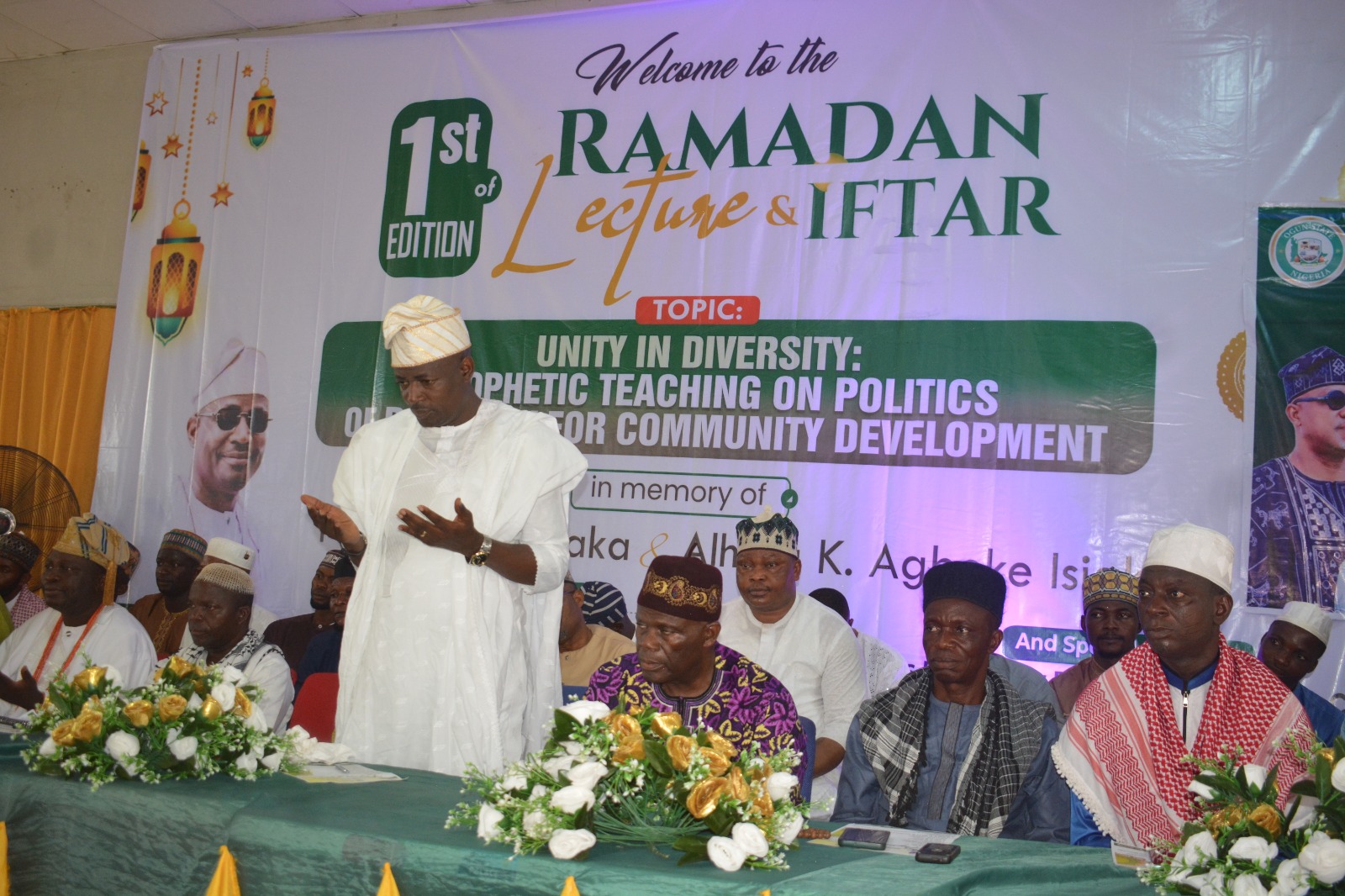
Adegbite warned that meaningful development cannot thrive in environments dominated by corruption, self-interest, and division.
He urged leaders to adopt value-based approaches that prioritize transparency, inclusiveness, and service to the people.
“Leaders who embody these virtues are better positioned to serve the interests of the people above personal or partisan considerations,” he added.
Addressing young people, Adegbite encouraged active participation in politics, advising them to engage with integrity and a strong sense of purpose.
He cautioned against being swayed by divisive rhetoric or short-term incentives, calling on them to become agents of positive change guided by moral principles.
The scholar also highlighted the role of religious institutions in shaping political consciousness. He said faith-based organizations have a critical role in promoting ethical leadership and civic responsibility among citizens.
Furthermore, Adegbite advocated for stronger collaboration between government, religious bodies, and traditional institutions, emphasizing that such partnerships are essential for building trust, strengthening governance, and ensuring inclusive and sustainable development.