



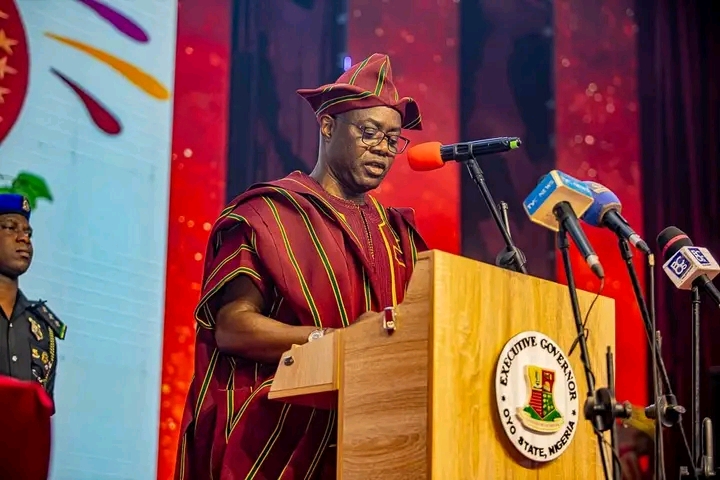
Ibadan, Oyo State — Oyo State Governor, Seyi Makinde, on Monday said he is a product of the free education policy introduced by the late former governor of the old Oyo State, Chief Bola Ige, describing the programme as one of the most impactful social interventions in the history of the state.
Makinde spoke at the opening ceremony of activities marking the 50th anniversary of the creation of Oyo State, held in Ibadan.
The state was created on February 3, 1976, during the military administration of the late General Murtala Muhammed, with Bola Ige serving as its first civilian governor between 1979 and 1983.
Recounting his personal experience, the governor said he benefitted directly from the free education policy implemented by Ige, which covered tuition and provided learning materials for pupils and students in public schools.
“I started my secondary education during Bola Ige’s free education programme. I attended Bishop Phillips Academy, and we were given everything. Books, chairs and tables. We paid no school fees,” Makinde said.
He explained that his administration’s decision to abolish tuition fees in public primary and secondary schools across Oyo State was inspired by the same philosophy of ensuring equal access to education for every child, regardless of family background or financial status.
“When I cancelled school fees, it was simply my own way of giving back to society and making sure no child is denied education because of lack of money,” he said.
Makinde stressed that the real strength of Oyo State lies in its people, adding that sustained investment in education, healthcare and infrastructure remains central to his government’s development agenda.
“The full strength of Oyo State is in its people. We can confidently say today that Oyo has moved from promises to performance,” the governor said.
He also paid tribute to past leaders of the state, particularly Bola Ige, noting that their policies laid a solid foundation for social mobility and inclusive growth.
The Oyo at 50 anniversary celebration is expected to feature cultural displays, policy dialogues and thanksgiving services, as the state reflects on its journey over the past five decades and sets a new direction for future development.