

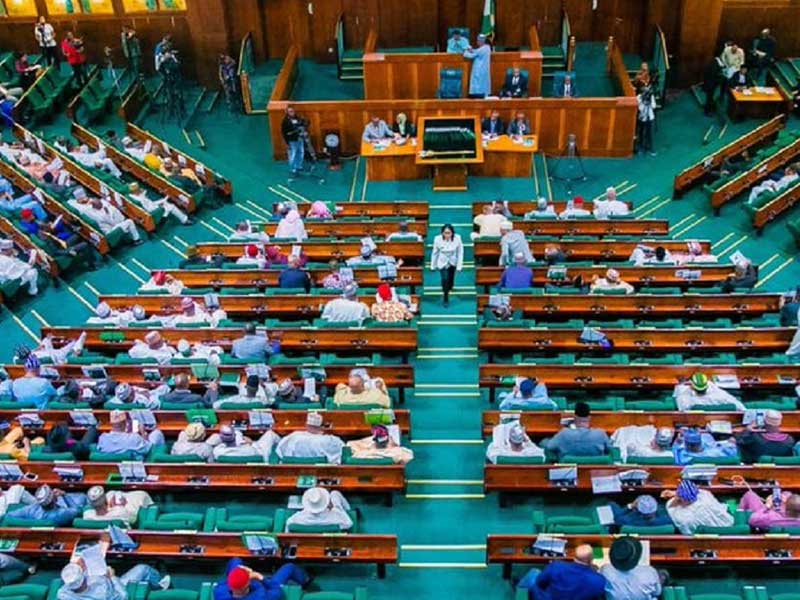
The House of Representatives has approved a 10 year jail term or a fine of N75 million for anyone found guilty of forging nomination papers or destroying election result sheets, as lawmakers moved to tighten sanctions for electoral offences.
The decision was taken on Thursday during plenary while considering amendments to the Electoral Act 2022. Under the revised provisions, the House increased the fine for electoral forgery from N50 million to N75 million, while also approving a N5 million fine for the improper use of a voter’s card.
Lawmakers, however, rejected a proposal seeking to impose a two year jail term on individuals who financially or materially induce delegates to influence the outcome of party primaries, congresses or conventions. Members argued that such a provision could easily be abused by political opponents to harass aspirants and candidates.
The House also removed an existing provision that required the outright cancellation of results and the conduct of fresh elections in polling units where over voting is established.
In its place, lawmakers approved a new framework that allows excess votes to be deducted proportionately from the scores of all candidates, while the Presiding Officer in the affected polling unit would face prosecution.
Speaking with journalists after plenary, Chairman of the House Committee on Electoral Matters, Adebayo Balogun, explained that the Electoral Bill 2025 was initially introduced to repeal the Electoral Act 2022 and enact a new law.
He said the proposal was driven by the need to consolidate gains from recent elections and address emerging challenges in Nigeria’s electoral system.
Balogun said the committee had proposed wide ranging reforms, including early voting, inmate voting, replacement of the Permanent Voters’ Card with more technology driven accreditation systems, adjustments to electoral timelines and other innovations.
He noted, however, that many of the proposals failed to secure sufficient support during joint committee sittings.
According to him, the House resolved that amendment, rather than outright repeal, was the appropriate approach since the more far reaching provisions were not approved at committee stage.
He stressed that the decision did not represent a setback for electoral reform, adding that what mattered was the effect of the legislation and not its label.
Balogun said the amendments were aimed at consolidating the strengths of the 2022 Act, addressing observed gaps and improving implementation without destabilising the existing legal framework.
He added that the process was inclusive, with engagements involving the Independent National Electoral Commission, security agencies, civil society organisations, political parties, professional bodies, development partners and citizens.
Lawmakers said the amendments were designed to strengthen accountability, deter electoral crimes and improve enforcement, particularly in areas such as forgery, voter card misuse and over voting, which had generated controversy during previous elections.