



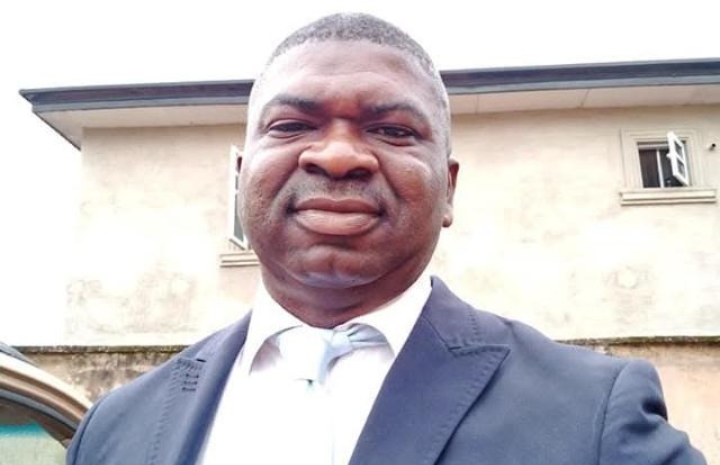
A public affairs analyst and Chairman of the Ijebu North East Forum, Bayo Ayanga, has questioned the extent to which Nigerians have benefited from 27 years of uninterrupted democratic rule, arguing that governments that do not genuinely emerge from the people’s mandate cannot effectively serve their interests.
Ayanga stated this during an interview on Frontline, a current affairs programme on Eagle 102.5 FM, Ilese-Ijebu, Ogun State, while reacting to discussions surrounding the 2026 Democracy Day celebration and the state of governance in the country.
His comments came amid the Federal Government’s assessment of the administration’s performance under the Renewed Hope Agenda. At a press briefing in Abuja, the Secretary to the Government of the Federation, George Akume, acknowledged prevailing economic challenges but maintained that recent economic indicators showed improvements in key sectors. Other government officials, including the Minister of Information and National Orientation, Mohammed Idris, and presidential aide, Bayo Onanuga, also highlighted Nigeria’s 27 years of uninterrupted democracy as a major achievement.
However, Ayanga said democratic success should not be measured solely by its continuity but by its ability to improve the lives of citizens and reflect the true will of the electorate.
He said, “The people are really benefiting from democracy. Which, that is an undeniable fact. When it comes to democracy, as in uninterrupted democracy, this is the first time in the history of Nigeria that we have had uninterrupted democracy between 1999 till today. And we are talking about 27 years.”
The analyst noted that while Nigeria deserves credit for sustaining civilian rule since 1999, questions remain about whether electoral processes have consistently reflected the wishes of the people.
According to him, democracy, by its universally accepted definition, must be a government of the people, by the people and for the people.
Ayanga said, “Have the subsequent governments from 1999 till today been by the people? Is it true that it is the people that have been voting in subsequent governments and administrations in this country? Is it truly by the people?”
He added, “Because if it’s not by the people, then obviously it can’t be for the people. Because it is when it is by the people that it can be for the people. But if it’s not by the people, then it cannot be for the people.”
Ayanga also expressed concern over the credibility of elections in the country, recalling remarks made by late President Umaru Musa Yar’Adua, who admitted shortcomings in the electoral process that brought him to power.
He argued that recurring allegations of electoral irregularities have continued to weaken public confidence in democratic institutions and governance.
The INEF chairman further criticised political parties for what he described as their failure to fully embrace internal democracy, despite reforms introduced through electoral legislation to promote wider participation in candidate selection.
He said the intention of electoral reforms was to empower party members and ordinary citizens to determine who would represent them in elections.
“You see, that’s what I’m saying. The intention of the Electoral Act was to give room for the people. That’s the intention of the drafters of the Electoral Act, to give room for the people to choose who will represent them and who will carry their flag,” he stated.
Ayanga maintained that although some individuals and groups had benefited from democratic governance over the years, the majority of Nigerians were still grappling with economic hardship and limited access to the dividends of democracy.
According to him, the growing desire among many young Nigerians to seek opportunities abroad reflects widespread dissatisfaction with governance and socio-economic conditions at home.
“Are we benefiting from democracy, the people of Nigeria? No. No. That’s my answer to that,” he said.