



By: Alhaji Korede Quadri (KQ), FCIB
The unfolding allegations of bribery surrounding the selection of a new Awujale of Ijebuland have taken a serious turn with the intervention of the Nigeria Police Force. What was once dismissed in some quarters as mere speculation has now entered the realm of official scrutiny, following the invitation of key individuals, including kingmakers, to the police headquarters in Abeokuta. This development changes the tone of the conversation and demands a more sober, principled reflection on the process.
For a stool as revered as that of the Awujale of Ijebuland, any hint of impropriety strikes at the very heart of tradition, culture and communal trust. The Awujale is not just a ceremonial figure. He is a custodian of history, a symbol of unity, and a moral compass for the people of Ijebu Ode and the wider Ijebuland. It is therefore not enough to select a king. The process itself must command respect.
The stance earlier taken by the Ogun State Government, calling for a fresh and credible process after identifying irregularities, now appears both timely and justified. In a society where public confidence in institutions is often fragile, decisive action in defence of integrity sends a powerful message. It shows that tradition, while sacred, must not be shielded from accountability.
There is also a broader national context to consider. With ongoing conversations at the National Assembly of Nigeria about expanding constitutional roles for traditional rulers, the moral standing of monarchs is under increasing scrutiny. Any process that produces a ruler tainted by allegations of corruption risks undermining not just a throne, but the credibility of traditional institutions across the country.
It must be clearly stated that the Awujale stool is not a political office. It is a sacred heritage that predates modern governance systems. Attempts to inject political calculations, financial inducements or personal ambitions into its selection process amount to a distortion of history. The throne belongs to the people and their ancestors, not to the highest bidder.
The issue of the Fusegbuwa Ruling House is central to this conversation. Established tradition dictates that this ruling house has the responsibility to present candidates for the vacant stool. However, that responsibility must be exercised with discipline, sincerity and respect for laid down customs. A process that produces an overwhelming number of aspirants raises legitimate concerns about structure and seriousness.
It is difficult to justify a situation where nearly a hundred names are submitted for consideration. Such an approach dilutes the sanctity of the exercise and opens the door to manipulation. A more credible path would involve a thorough internal screening that produces a limited number of qualified princes who truly embody the values expected of a future Awujale.
The role of kingmakers, led by respected figures such as the Ogbeni Oja of Ijebuland, High Chief Sunny Kuku, is also critical. Their responsibility goes beyond mere selection. They are guardians of tradition and must ensure that every step of the process reflects fairness, transparency and cultural authenticity. Their integrity must remain unquestionable.
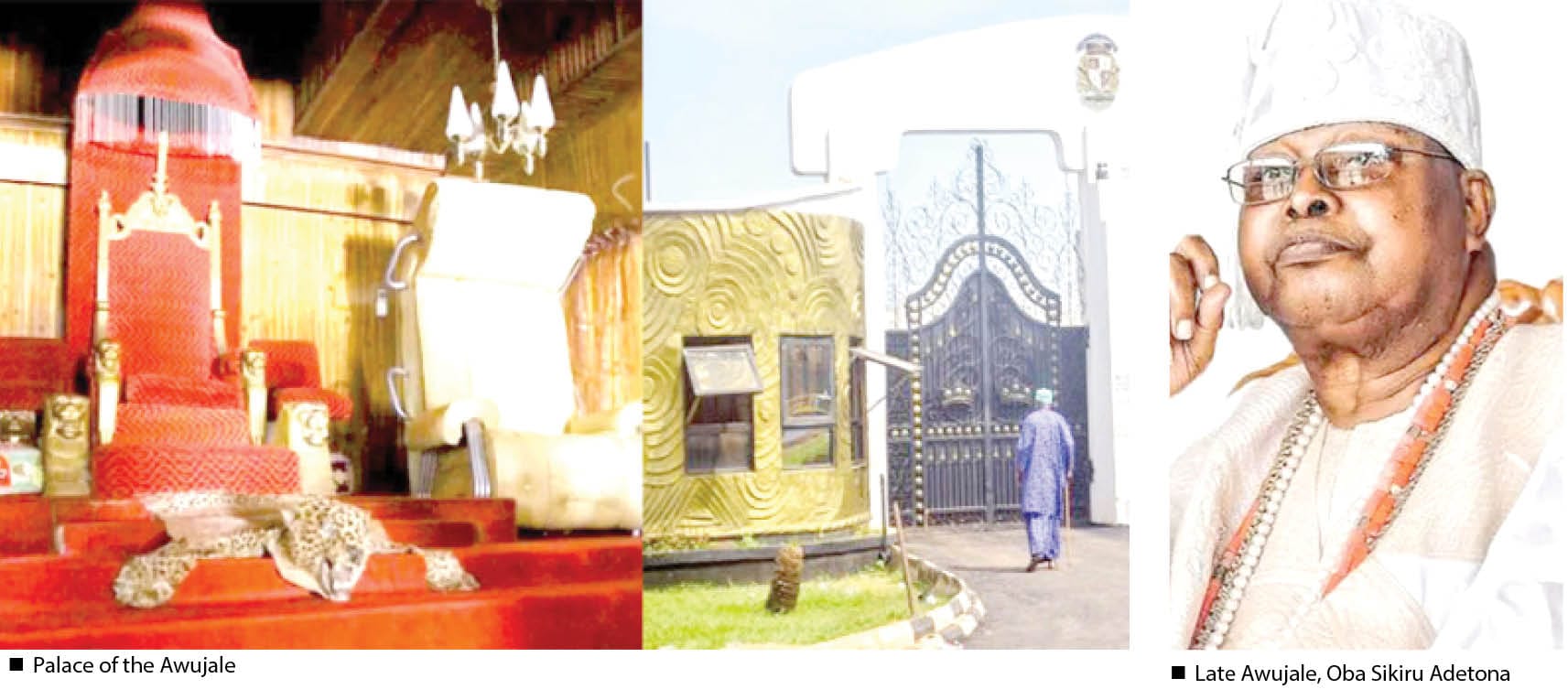
History provides a compelling example. The late Awujale emerged in 1960 while he was still in school, despite the presence of older and seemingly more established candidates from the Anikilaya Ruling House. Guided by the 1957 declaration law of the old Western Region under Obafemi Awolowo, the process was conducted with fairness and openness. That sincerity produced a monarch whose reign earned widespread respect.
That example stands in sharp contrast to the current controversy. It reinforces the argument that the strength of a traditional institution lies not in the affluence of its ruler, but in the legitimacy of the process that produces him. When due process is compromised, the authority of the throne is weakened from the very beginning.
The involvement of the police in inviting nine kingmakers for questioning is a development that must not be ignored. While investigations are ongoing, it is clear that the situation has moved beyond internal disagreements to issues of potential legal consequence. This should serve as a wake up call to all stakeholders.
At this stage, the decision by the Ogun State Government to pause and possibly reset the process is both prudent and necessary. Rushing to fill the stool under a cloud of controversy would do more harm than good. It is better to delay and get it right than to proceed and regret the outcome for generations.
When the process eventually resumes, it must be anchored on transparency and strict adherence to existing legal frameworks, including the 2021 Ogun State Chieftaincy Declaration Law. The ruling house should engage in honest dialogue, resolve internal disputes and present candidates who meet clearly defined criteria.
These criteria should include moral integrity, cultural knowledge, fluency in the Ijebu dialect and a genuine connection to the people. Beyond these, compliance with both traditional customs and statutory provisions must guide every step to avoid further disputes or legal complications.
The question of character cannot be overemphasized. A monarch who ascends the throne under suspicion of bribery or misconduct will struggle to command respect. The Awujale, by virtue of his position, may also serve as chairman of traditional rulers in Ogun State. Such a role requires an unimpeachable record.
There is also the need to respect the deep rooted traditions that govern succession. Long before the advent of Christianity and Islam, the people of Ijebuland had established systems that ensured order and continuity. These systems must not be discarded in the name of modernity or convenience.
Personal ambition should never override collective heritage. The temptation to influence the process through financial means or political connections must be firmly resisted. The throne is not an investment opportunity. It is a sacred duty.
The people of Ijebuland are watching closely. Their expectations are clear. They want a process that reflects their values and a ruler who embodies their aspirations. Anything short of that will create divisions and erode trust.
The ongoing investigation by the Nigeria Police Force must be allowed to run its course without interference. Accountability is not an attack on tradition. Rather, it is a necessary step in preserving its credibility in a changing world.
Ultimately, the future of the Awujale stool depends on the decisions made at this critical moment. Stakeholders must rise above narrow interests and focus on the bigger picture. The integrity of the institution is at stake.
A transparent, disciplined and culturally grounded process will not only produce a worthy Awujale but also strengthen the relevance of traditional leadership in contemporary Nigeria. This is an opportunity to set a standard that others can follow.
In the end, the crown should rest on the head of a man whose life reflects honour, whose words inspire confidence and whose leadership unites the people. Anything less would be a disservice to Ijebuland and its rich heritage.
Written by:
Alhaji Korede Quadri (KQ), FCIBWednesday 22nd April, 2026