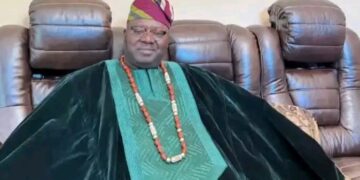


Former Senator representing Kaduna Central, Shehu Sani, has warned that ongoing economic reforms by the Federal Government risk failure if Nigerians continue to endure hardship without clear and immediate relief, stressing that public patience has limits when daily living conditions keep worsening.
Sani gave the warning while speaking on Frontline, a current affairs programme on Eagle 102.5 FM, Ilese Ijebu, where he argued that although reforms are necessary, they must be humane, well timed and backed by visible support for citizens.
According to him, reforms that deepen poverty without offering hope will eventually lose public backing.
“When people are suffering and they cannot see light at the end of the tunnel, reforms will not survive,” Sani said. “No matter how well intentioned a policy is, hardship without hope will sink it.”
Speaking on the removal of fuel subsidy, Sani said the policy was economically unavoidable but faulted the government’s approach to its implementation.
“Subsidy was not sustainable for a country of over 230 million people. If we had continued, we would simply be eating our future,” he said.
However, he insisted that the problem was not the decision itself but the absence of cushioning measures.
“You don’t remove subsidy first and start looking for palliatives later. You cushion the people before you introduce the shock,” he added.
Sani noted that while states now receive significantly higher federal allocations following subsidy removal, the benefits have not translated into improved living conditions for citizens.
“States are getting more money today than ever before, yet the people are not feeling it. That is the real problem,” he said.
He warned that deepening poverty poses a serious threat to national stability.
“When most people are poor, they have nothing to lose. That is how protests start and societies become unstable,” Sani cautioned.
On governance, the former lawmaker said the current administration came into office with high expectations but underestimated the scale of Nigeria’s challenges.
“Campaigning is different from governing. Many promises are made without fully understanding what is on the ground,” he said.
While acknowledging that the government had embarked on reforms previous administrations avoided, he stressed that leadership must balance policy choices with compassion.
“No president will ever be popular while implementing painful reforms. But people will only endure if they see hope and fairness,” Sani said.
Addressing insecurity, Sani described it as a long standing problem inherited by successive governments, noting that although there have been pockets of improvement, the crisis remains far from resolved.
“Yes, student abductions have reduced in some areas and some highways are safer, but killings by bandits and terrorists are still happening,” he said.
He urged the government to ensure that reforms also deliver safety and dignity to ordinary Nigerians.
“Within this year, Nigerians must see that reforms will also bring security, especially for people in rural communities,” he added.
Sani also raised concerns over the continued denial of funds to local governments despite the Supreme Court ruling granting them financial autonomy.
“What is the point of local government if money never reaches the grassroots?” he asked.
According to him, proper funding of councils would stimulate rural development and reduce migration to major cities.
“If local governments are properly funded, development will reach villages, and people won’t keep running to Abuja to survive,” he said.
On Nigeria–United States relations and comments by former US President Donald Trump alleging genocide in Nigeria, Sani dismissed the claims as politically motivated.
“Trump’s statement is not about Nigeria. It is about Trump,” he said, adding that Nigeria must handle foreign relations with caution and restraint.
Commenting on opposition politics and the emerging ADC coalition, Sani said Nigerians were being presented with recycled political elites.
“These are people who held power before and failed. Nigerians are being asked to choose between those in power today and those who failed yesterday,” he said.
He concluded by stressing that reforms must be fair, inclusive and matched by modest leadership conduct.
“When people are told to make sacrifices and those in power continue to live ostentatious lives, nobody will take reform seriously,” Sani said.