




The National Drug Law Enforcement Agency (NDLEA) has raised the alarm over attempts by international drug cartels to establish footholds in Nigeria, particularly through the use of forests in Ogun and Oyo states for the production of illicit drugs.
The agency said Mexican-linked criminal networks had been involved in attempts to establish industrial-scale methamphetamine laboratories in forest locations across the two states, signalling a growing international dimension to drug trafficking in the country.
The Director of Media and Advocacy and spokesman of the NDLEA, Femi Babafemi, disclosed this on Thursday during an interview on Frontline, a current affairs programme on Eagle 102.5 FM, Ilese-Ijebu.
Babafemi said the agency had uncovered efforts by foreign criminal elements to penetrate Nigeria’s illicit drug market, adding that the NDLEA was taking the fight directly to the cartels instead of merely waiting for illicit substances to be moved through airports, seaports and highways.
He said recent operations had exposed activities linked to methamphetamine production in forests in Ogun and Oyo states, while another operation in Ebonyi State had resulted in arrests.
“We’ve seen recently the collaboration between the Nigerian-Mexican cartels trying to have methamphetamine laboratories in the forests of Ogun and Oyo State and just a few days we had one again in Ebonyi State, and those behind that have been rounded up and we will definitely make that public as soon as all the necessary protocols have been tidied up.”
According to him, the development demonstrated the increasingly international character of drug trafficking and the determination of foreign cartels to establish production bases in Nigeria.
“They are trying to come in through whatever means they have to establish footholds, because it’s a global phenomenon, it’s a global challenge, so they are all networked, and that’s why we also, as law enforcement, we also network with our counterparts.”
Babafemi said the NDLEA was strengthening collaboration with other security agencies in Nigeria, stressing that the war against illicit drugs could not be handled by a single organisation.
He said the agency’s strategy had shifted towards intelligence sharing, disrupting supply chains and dismantling drug networks at their sources.
“We’re mopping up all of those floods of illicit substances across our communities and our streets, but beyond that, we’re taking this to them, right wherever they may be trying to do this.”
The NDLEA spokesman said the agency was also targeting the financial backbone of drug cartels and their operational assets, in addition to arresting suspects and intercepting illicit substances.
“We are dismantling all their structures and disabling their capacity and capability, whether in terms of their financial backbone, or their instrumentalities.”
He said increased enforcement at Nigerian airports and seaports had forced some international traffickers to explore alternative routes through neighbouring countries.
According to him, the agency recently dismantled a cartel operating along the Togo-Benin Republic-Nigeria corridor, a route he described as having contributed to the spread of opioid abuse among Nigerian youths.
Babafemi also disclosed that the NDLEA was strengthening its capacity to monitor drug trafficking activities in cyberspace, including open social media platforms, the dark web and cryptocurrency networks.
He said several arrests had resulted from intelligence gathered through social media, adding that officers were receiving specialised training in financial investigation, asset tracing and recovery of proceeds linked to narcotics trafficking and organised crime.
The spokesman further warned against the growing online glorification of illicit drug use, particularly by social media influencers.
“We’ve seen deep glorification of the glamorization of illicit substances, especially by social media influencers and that’s why a number of them had also been taken down.”
He said the agency was working with the Actors Guild of Nigeria and the Performing Musicians Association of Nigeria to discourage the promotion of illicit substances through entertainment and social media.
Babafemi said the NDLEA had adopted a combination of enforcement and engagement, which he described as the “stick and carrot approach”, to address drug-related activities among influencers.
He explained that while offenders would be sanctioned, the agency would also engage individuals and groups in the entertainment industry to encourage them to reconsider messages that could promote substance abuse.
The NDLEA spokesman described international drug cartels as highly organised and dangerous criminal enterprises, warning that their activities posed serious threats to society.
“Drug cartels anywhere in the world are very deadly. In fact, nobody would do that kind of business and would not be deadly because you know what you are doing is not adding any value to human life.”
He added that the agency considered the operators “merchants of death” because of the destructive consequences of their activities.
Babafemi said the NDLEA’s concerns now extended beyond cannabis, cocaine and tramadol to synthetic drugs such as methamphetamine and Captagon.
He explained that cocaine was not produced in Nigeria but was transported from South America through Africa before being moved to Europe, Asia and other destinations.
He said the high international value of narcotics was partly responsible for the determination of criminal networks to establish production and distribution channels.
According to him, a kilogramme of methamphetamine or cocaine could sell for as much as $500,000 in some parts of the world.
Babafemi disclosed that the methamphetamine laboratory discovered in an Ogun forest had the potential to produce drugs estimated to be worth almost half a trillion naira.
“So, that’s why you see, what was to come out of the meth lab in the Ogun Forest was almost half a trillion Naira in value.”
Meanwhile, the agency has introduced an Alternative Development Programme aimed at encouraging cannabis farmers to abandon illicit cultivation and embrace legitimate livelihoods.
Babafemi said the pilot programme was launched in three communities in Ondo State, namely Ifon near Owo, Ilu-Abo and Eleyewo around Akure.
He said cannabis growers involved in the programme were encouraged to take up alternative livelihoods, including poultry farming, fishing and the cultivation of legitimate cash and food crops.
According to him, the NDLEA had returned to the communities to assess the second phase of the programme and recorded “very tremendous” outcomes.
The spokesman also disclosed that the agency’s Marine Command was monitoring Nigeria’s waterways and had strengthened its capacity to intercept drug consignments being moved through the country’s maritime space.
He said officers of the Marine Command had received training in the United Kingdom, United States, Brazil and other countries.
Babafemi disclosed that cocaine, methamphetamine and cannabis were recently seized on the high seas in Akwa Ibom State, with the consignment allegedly being transported towards Cameroon.
“Just last week, there were consignments of cocaine, meth, and cannabis that were seized on the high sea in Akwa Ibom State. That consignment was being taken to the Republic of Cameroon.”
He said the agency was also conducting forensic investigations and working with international partners to track the movements and financial activities of suspected drug traffickers.
Babafemi disclosed that NDLEA personnel were receiving additional equipment and specialised training in response to the increasingly dangerous nature of drug trafficking operations.
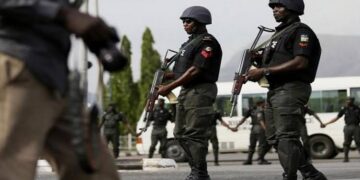
He said officers had access to life and injury insurance and had undergone specialised training, while the agency had acquired arms, ammunition, protective equipment, night-vision devices and bulletproof operational vehicles.
He added that modern AK-47 rifles had been introduced into the NDLEA armoury for the first time in the agency’s history.
“We call it induction, especially for the first time in the history of the agency, modern AK-47 rifles have been introduced or inducted into the armory of the agency. That’s to further fortify our personnel and our offices against these criminal elements.”
The spokesman also disclosed that the agency was developing residential accommodation for its personnel in strategic locations, including Yola, Lagos, Abuja and Enugu.
He said the initiative was intended to provide officers and their families with secure accommodation, particularly for personnel involved in operations against drug traffickers within communities.
“For the first time in the history of the agency, we are having barracks in parts of the country, so that our officers can stay in a secure environment with their family without the fear of going back to the midst of the same community where they have gone to arrest drug traffickers or drug dealers.”
Babafemi said the NDLEA remained determined to prevent criminal organisations from exploiting forests, waterways, digital platforms and international routes as ungoverned spaces for drug production and trafficking.
“We’re winning, as much as they want to continue to push this, we’re ensuring that they don’t have that space, the ungoverned space that they used to enjoy before now, that’s no longer the case.”