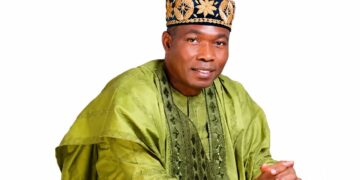




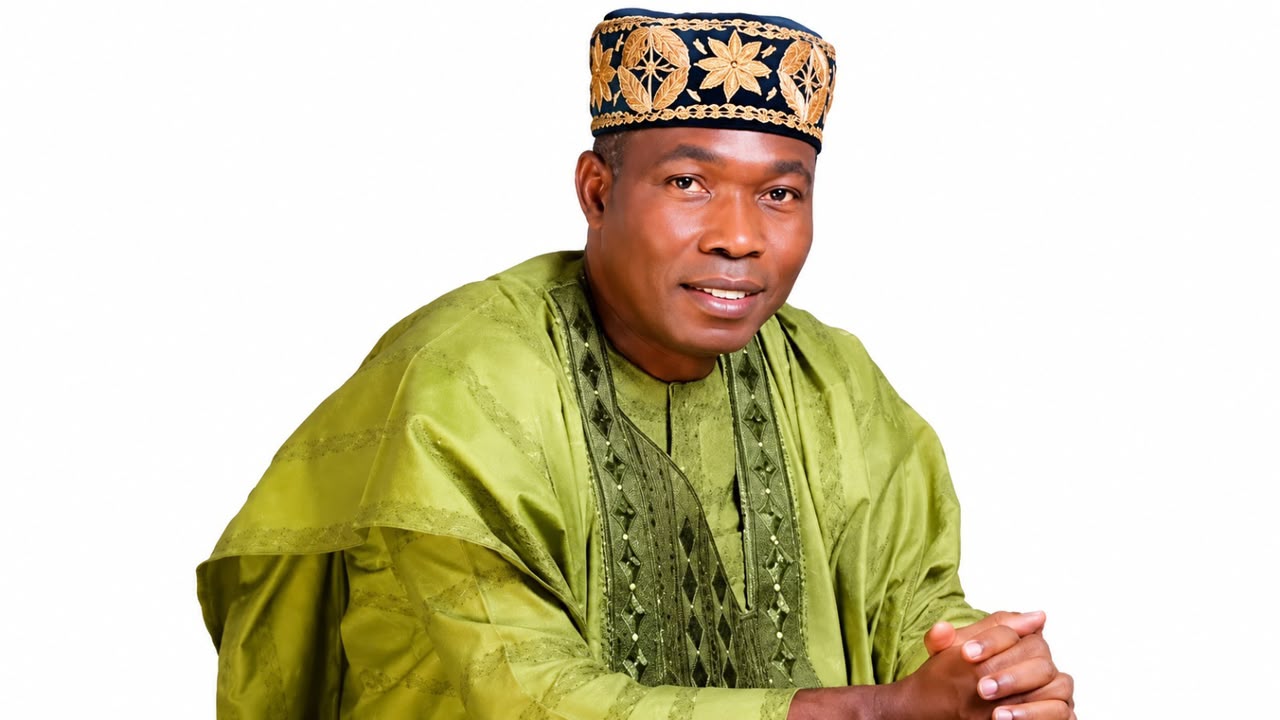
The presidential candidate of the Social Democratic Party (SDP), Prince Adewole Adebayo, has accused President Bola Ahmed Tinubu of suffering from what he described as “economic illiteracy”, arguing that the president’s economic policies are being driven by advisers who are “pulling wool over his eyes.”
Adebayo made the allegation on Wednesday during an interview on Frontline, a current affairs programme on Eagle 102.5 FM, Ilese Ijebu where he assessed the Tinubu administration’s economic reforms and outlined what he said would be an alternative approach if elected president in 2027.
The SDP candidate said he did not believe the president was deliberately lying about the direction of the economy, but argued that Tinubu lacked the economic understanding required to properly evaluate the consequences of the policies being implemented by his administration.
“The president suffers from economic illiteracy. He doesn’t know economics and he doesn’t have advisors. You know, he’s a very sound accountant but he doesn’t know economics.”
According to him, the consequence of the alleged knowledge gap was that those around the president were able to misrepresent economic realities to him.
Adebayo’s assessment came while responding to the argument that the Tinubu administration’s economic reforms, including the removal of fuel subsidy and exchange-rate reforms, were laying the foundation for long-term prosperity. The SDP candidate however rejected that position, arguing that economic management could not be assessed solely on the basis of benefits expected years into the future while Nigerians were suffering immediate hardship.
According to Adebayo, effective government must therefore operate across different time horizons instead of asking citizens to endure present suffering for the promise of future prosperity.
He said the government had a responsibility to deal simultaneously with problems inherited from previous administrations, challenges confronting citizens in the present and the needs of future generations.
“Government is about dealing with the past, the present, and the future at the same time. You pay the debt you meet on the ground, you address new issues that are coming now and you plan for the future. That is how you govern.”
The SDP candidate explained that economics and governance require immediate intervention where citizens are experiencing hunger and deprivation.
“In government and economics, if I’m hungry today, you give me food, then you plan for the food I will eat tomorrow,” he said.
Adebayo also argued that a new government could not escape financial and administrative obligations inherited from its predecessor. He said an incoming administration would also have to meet new obligations while creating enough economic room for its successor to operate.
“Unless I borrow money to buy food yesterday, you pay it. When I come into government, all the people Tinubu refuses to pay, I have to pay them,” he said.
“And I have to plan for the government after me, to see that I give them sufficient cushion, and I give them programs and projects that they will meet on the ground. I will carry the country forward,” he said.
Adebayo further argued that the inability of some leaders to understand contemporary economic realities was affecting their capacity to formulate effective policies.
“Some can’t grapple with the issues and they can’t put the hard work required. So they just manage it like that,” he said.
According to Adebayo, the problem was not merely the age of the political leaders but the inability to adapt their thinking to a modern and increasingly dynamic economy.
“The ideas are bigger than them. The system is too dynamic. The world is too modern,” he said.
“And they don’t know it. Some of the needs that I can recognize, they can’t recognize it. Because they were noy brought up like that,” he added.
Adebayo argued that economic wealth was increasingly being created through sectors and technologies that older political leaders might not fully understand.
“They didn’t grow up in this kind of world where we are now where productivity is at the peak. Most of the things that is creating wealth now, if you display it to President Tinubu or Atiku Abubakar, they can’t understand it. It’s beyond them and that’s why they can’t cope,” he added.
Adebayo also linked his economic criticism to the removal of fuel subsidy, a policy he opposed during the 2023 presidential election. He recalled that while other politicians were advocating the removal of subsidy, he had warned against the policy and proposed alternatives for dealing with the country’s energy challenges.
“It’s clear that everything we said four years ago has come to pass. Not one is missing. We said don’t remove subsidy and worsen inflation which will hurt everybody in the economy and don’t tax everybody to death”, he stated.
According to him, the central issue should not be an abstract debate over whether subsidy should exist, but why Nigerians were unable to access affordable energy in an oil-producing country.
“Nigerians are not crying over subsidy or lack of subsidy, Nigerians are talking about lower the cost of petrol, and lower the cost of transportation,” he added.
Adebayo said his proposed solution would focus on reducing the cost of production and living rather than merely reintroducing or removing subsidies. He proposed the use of Nigeria’s domestic refining capacity to reduce petrol prices, arguing that government should ensure that the country’s refineries operate and domestic fuel is made available at a significantly lower price.
He added that his administration would work towards selling petrol domestically at a price of about N200 per litre if the country’s refineries were functioning as intended.
“So the first thing to do is to look at things people spend money on housing, food, health care, transportation, education. And if, for example, you will follow the law, which we are going to do, we will ensure that we produce petrol and sell petrol at 200 Naira,” he said.
Adebayo argued that private refiners could sell at higher prices if they chose to, but that government should focus on making domestically produced petroleum products affordable to Nigerians. He also said the country could use crude allocated for domestic consumption to produce petrol, diesel and aviation fuel, while selling those products meant for domestic consumption at reduced rates.
“That allocation is what I will use because out of that I will produce gas, I will produce petrol, I will produce diesel so with that calculation I should be able to sell petrol for 120 Naira per litre because from that 450,000 barrels or 500,000 barrels, I’m producing other things which I’m selling at the commercial rate.”
According to him, the country’s failure to refine its own petroleum products had forced Nigerians to absorb costs associated with foreign production, transportation, insurance, financing and profits. He argued that Nigeria had effectively been calculating the landing cost of imported petroleum rather than the cost of producing the commodity domestically.
Adebayo extended his criticism to the foreign exchange and electricity sectors, arguing that the government had shifted attention away from using these sectors to facilitate economic activity and provide reliable services, towards creating opportunities for financial gains by politically connected interests. He said the same pattern was evident in the petroleum sector and alleged that the structure of the electricity market had prioritised revenue collection over reliable power supply.
He said: “It’s foreign exchange. It’s not about how to facilitate the economy. It’s about how to make money from central bank. So, it’s the perversion of the petroleum market. The same thing about electricity. It’s not about how to give you reliable electricity. It’s about how to create discos. Then they will be collecting tariff and the tariff money will be shared between the government, the politicians and the disco owners. So, whether you have darkness or you have light, they will continue to charge you. So, that is just a way of making money off people without solving their problems.”
Adebayo maintained that his position on the economy was one of the reasons Nigerians should consider the SDP in 2027, insisting that the policies he warned against before the 2023 election had subsequently become major national challenges.
Adebayo therefore urged Nigerians to look beyond established political figures and consider candidates who, in his view, understood the economic problems confronting the country and had practical alternatives for solving them.