

By Adejola Adeyemi Crown
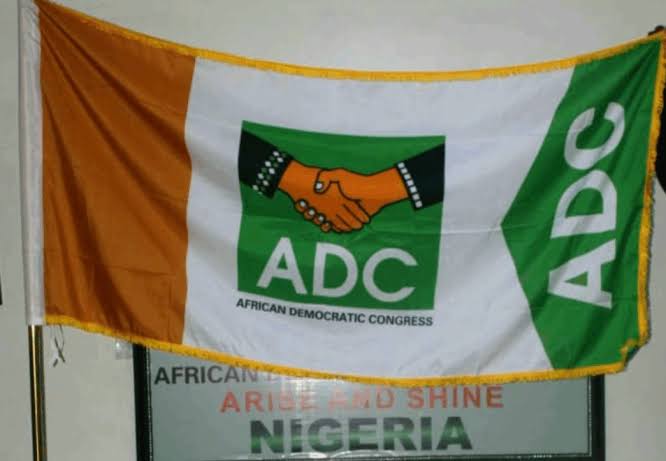
The race towards Nigeria’s 2027 presidential election is already gathering momentum with the formation of a new political alignment under the African Democratic Congress, ADC.
The coalition, which parades notable political figures from different regions and backgrounds, is seen by many as an attempt to create a formidable third force to challenge the dominance of the ruling All Progressives Congress, APC, and its leader, Bola Ahmed Tinubu.
While coalitions and political realignments are not new in Nigeria, the question that remains is whether this gathering of seasoned politicians, technocrats, and political actors truly has the national appeal, grassroots strength, and unity of purpose to defeat Tinubu at the polls.
The ADC-led coalition brings together individuals who have played significant roles in Nigeria’s political and governance space over the last two decades. The names making waves within the group include former Vice President Atiku Abubakar, former Anambra State Governor and 2023 Labour Party presidential candidate, Peter Obi, former Kaduna State Governor Nasir El-Rufai, immediate past Attorney General of the Federation, Abubakar Malami, former APC National Chairman, John Odigie-Oyegun, Federal Capital Territory lawmaker, Ireti Kingibe, Anambra Central Senator, Victor Umeh, former Minister of Youth and Sports, Solomon Dalung, media personality Dele Momodu, former Senate President David Mark, former Benue State Governor, Gabriel Suswam, former Minister of Transportation and ex-Rivers State Governor, Rotimi Amaechi, and former Osun State Governor and immediate past Minister of Interior, Rauf Aregbesola.
The presence of such high-profile individuals has fueled debates about the future of Nigeria’s political landscape, with many questioning whether this coalition represents genuine hope for the masses or just another gathering of elite politicians with personal ambitions.
The reality on the ground suggests that defeating an incumbent president in Nigeria requires more than political popularity within Abuja, media buzz, or elite gatherings. It demands deep grassroots structures, nationwide voter appeal, penetration into rural areas, and the ability to overcome ethnic, regional, and religious sentiments that have historically shaped electoral outcomes.
President Bola Tinubu remains a towering figure in Nigerian politics, not only because of his incumbency advantage but due to his strong political network, financial resources, and loyal support base, particularly in the South-West and parts of the North.
Despite current economic challenges, including rising inflation, fuel price hikes, naira devaluation, and general hardship among citizens, the ruling APC still maintains significant control across Nigeria’s thirty-six states, backed by established political structures that opposition parties have struggled to dismantle.
The emergence of a third force coalition comes at a time when frustration with the current administration is palpable among many Nigerians. Yet, frustration alone has never been enough to bring about political change. It must be coupled with organized, united, and consistent voter mobilization.
Within the coalition, the most prominent figure with visible national momentum is Peter Obi. His performance during the 2023 elections, where he secured over six million votes and won in several states, especially in the South-East, South-South, and parts of the North-Central, demonstrated the strength of his appeal among urban youths, professionals, and first-time voters.
However, Obi’s campaign also exposed significant weaknesses in rural mobilization and his limited political structure outside major cities. His inability to secure substantial support in the deep North and South-West areas remains a critical challenge.
Atiku Abubakar, a veteran politician with experience and a stronghold in the North-East, retains influence within traditional PDP circles. Still, his repeated presidential bids without success have led to perceptions of political fatigue and questions about whether he represents the change many Nigerians seek. His political relevance remains intact, but translating that into a nationwide winning coalition in 2027 will not be automatic.
The inclusion of Nasir El-Rufai, a technocrat and influential Northern figure, adds another layer of complexity to the coalition. El-Rufai commands respect among certain elite groups and has a reputation for administrative competence, yet he is also seen as a divisive figure whose policies and statements often spark controversy. His presence may boost the coalition’s credibility among political elites but could complicate efforts to present a united, people-centered front.
Rotimi Amaechi’s involvement is significant given his influence in the South-South, particularly Rivers State. Amaechi is known for his strategic political thinking, grassroots mobilization skills, and history as both a governor and minister.
His defection from APC circles signals deeper dissatisfaction within the ruling party and could tilt support in key battleground states. However, Amaechi’s political base has been weakened by internal crises within Rivers politics, and his national acceptance beyond his home region remains uncertain.
The addition of Rauf Aregbesola is another factor political analysts are watching closely. Aregbesola, a known political ally of Tinubu in the past, has built strong grassroots support in the South-West, particularly Osun State.
His role as former Minister of Interior and his bold, populist political style have earned him loyalty from certain quarters, especially among working-class groups. His strained relationship with Tinubu in recent years suggests internal cracks within the APC that this coalition could exploit. However, whether Aregbesola’s presence can significantly shift voter allegiance in the South-West remains debatable, given Tinubu’s deep political roots in the region.
Other coalition members such as John Oyegun, Ireti Kingibe, Victor Umeh, Solomon Dalung, Dele Momodu, Gabriel Suswam, and David Mark bring political experience, regional influence, and elite connections. Yet, none individually possess the mass voter appeal, national popularity, or electoral structure required to unseat an incumbent president. Their contributions to the coalition may shape strategies and offer policy depth, but their ability to swing votes on election day is questionable.
The critical challenge for the ADC-led coalition lies in unity of purpose and the willingness of these political heavyweights to set aside personal ambitions for the collective goal of presenting a credible alternative to Nigerians. Historically, Nigerian opposition coalitions have struggled with internal power tussles, egos, and regional rivalries, leading to fragmented efforts that ultimately hand victory to the incumbent.
For this new coalition to pose a genuine threat to Tinubu in 2027, they must agree on a single consensus candidate with the capacity to appeal across Nigeria’s diverse regions, mobilize rural and urban voters, and inspire confidence among disillusioned citizens. Anything short of that would replicate the pattern seen in 2023 where opposition votes were split between multiple parties, easing Tinubu’s path to victory.
As it stands, Tinubu enjoys the advantage of incumbency, a vast political machinery, control over state structures, and loyalty from many APC governors and lawmakers. Unless economic conditions worsen significantly and the coalition transforms itself from a gathering of political names into a unified, people-driven movement, the opposition remains at a disadvantage.
The political future of Nigeria is undoubtedly uncertain, and while the ADC coalition introduces fresh dynamics into the equation, translating that into an electoral upset will require more than familiar faces and political rhetoric. The coalition must prove to Nigerians that it is not just another alliance of recycled politicians, but a genuine platform capable of addressing the nation’s challenges and providing real leadership.
With 2027 still a few years away, time remains for political strategies to evolve, but for now, Tinubu remains the man to beat, and only a disciplined, united, and broadly accepted opposition can alter that reality.