



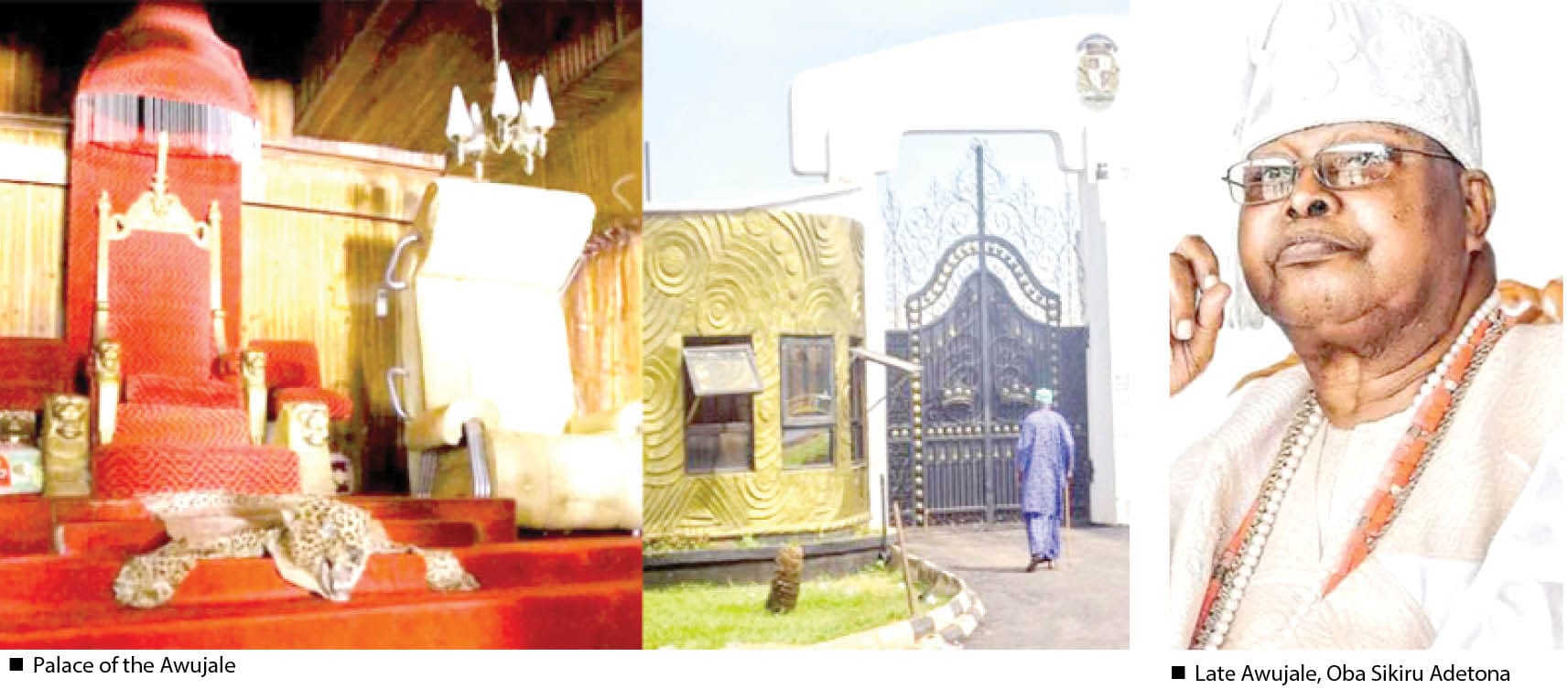
The process of selecting a new Awujale of Ijebuland is one of the most significant traditional exercises in Ogun State. It is not merely the emergence of another monarch, but the installation of the paramount ruler of Ijebuland, a custodian of the people’s rich cultural heritage and a symbol of unity for generations.
For this reason, the Ogun State Government, as the final authority in the approval process, must ensure that every stage of the exercise is transparent, credible and firmly rooted in the customs and traditions that have governed the revered institution for centuries.
The Awujale stool is unlike many other traditional institutions because of its paramount status. It occupies a unique position in the traditional hierarchy of Ogun State and serves as a rallying point for all sons and daughters of Ijebuland, both at home and across the diaspora. Such an important institution must never be subjected to avoidable controversy or political influence.
History and tradition clearly recognise only four ruling houses in Ijebu Ode. By the established order of succession, the Fusegbuwa Ruling House is expected to produce the next nominee for the throne. However, the nomination process must strictly involve bona fide princes from the ruling house who satisfy all customary requirements.
The selection process should not be shrouded in secrecy. Rather, it should be conducted in a manner that inspires confidence among the people. Stakeholders, including traditional institutions, respected community leaders, and the wider Ijebu community, should be adequately informed to ensure that the eventual choice reflects the accepted customs of the land.
It is equally important to distinguish between tradition, culture and religion. While religion remains a personal matter, the selection of the Awujale has always been governed by long established traditional principles. These customs have preserved the integrity and dignity of the institution for generations and should continue to serve as the guiding framework for the current exercise.
Allowing religious considerations, political interests or personal affiliations to overshadow established tradition could create unnecessary divisions and undermine public confidence in the process. The institution deserves to remain above partisan interests and sectional considerations.
Another issue that deserves serious attention is the possibility of litigation. Court cases arising from disputes over traditional succession often linger for years, creating uncertainty and weakening the moral authority of the throne. Such situations can be avoided if all parties faithfully adhere to due process and established customary procedures from the outset.
The next Awujale must emerge as a symbol of unity, peace and continuity. He should be a monarch who commands widespread respect because his emergence followed a transparent, fair and culturally acceptable process. The throne should unite the people rather than deepen divisions within the ruling house or the larger Ijebu community.
Wealth, political connections, influence or external endorsements should never outweigh legitimacy under tradition. The qualities expected of the next Awujale must be measured against the customs, values and cultural heritage of Ijebuland, not contemporary political calculations.
It is noteworthy that the Ogun State Government previously suspended the succession process after concerns emerged that the exercise had been compromised. That decision was widely seen as an effort to protect the sanctity of the institution and restore public confidence. As the process resumes, the government has another opportunity to demonstrate fairness, transparency and unwavering commitment to due process.
The Awujale institution has remained one of the most respected traditional institutions in Nigeria because successive occupants of the throne have upheld its dignity and prestige. Every stakeholder involved in the current succession process has a responsibility to preserve that legacy.
The emergence of a new Awujale should be remembered as a process that strengthened the institution, reinforced public trust and preserved the customs handed down by generations of Ijebu forebears. Anything short of that would diminish the integrity of one of Nigeria’s most revered traditional stools.
By Alhaji Korede Quadri (KQ), FCIB
Concerned Ijebu Ode Indigene