



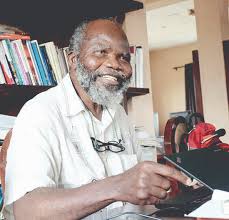
A retired Major General of the Nigerian Army, Ishola Williams, has accused the Federal Government of lacking commitment to meaningful security reforms, insisting that Nigeria already operates a form of state policing through regional security outfits such as Amotekun.
Williams made the assertion on Friday while speaking during Frontline, a current affairs programme on Eagle 102.5 FM, Ilese-Ijebu, Ogun State.
The retired military officer argued that the persistent debate over state police was unnecessary, noting that sub-national security structures already exist and only require constitutional recognition and proper legal backing.
According to him, what Nigeria urgently needs is a constitutional amendment that would formally empower existing security networks and improve coordination among security agencies.
“We’ve already got a state police in practice. What we actually need now is a constitutional amendment to recognise and properly structure what already exists on the ground,” he said.
Williams lamented what he described as policy confusion and institutional overlap within the nation’s security architecture, saying the situation had weakened efforts to tackle rising insecurity.
He further warned that Nigerians were facing a dual crisis of insecurity and economic hardship.
“The reality is that Nigerians are now living in fear and deprivation at the same time. People cannot afford basic living, and at the same time, they cannot move safely. When both fear of hunger and fear of violence exist together, then the nation is in danger,” he stated.
The former army general criticised the Federal Government’s handling of security challenges, particularly in the South-West, alleging that official responses often lacked urgency and strategic coordination.
He also questioned the effectiveness of the Office of the Special Adviser to the President on Homeland Security, expressing concerns over the absence of visible engagement and public communication despite worsening security challenges across the country.
“We have an office that was created for homeland security, but there is no public engagement, no briefing, no visible strategy. It raises serious concerns about whether the system is even coordinated,” he said.
Williams faulted proposals centred on recruiting large numbers of operatives without adequate training, describing such measures as ineffective against organised criminal groups.
He equally called for a clear distinction between public safety and national security responsibilities, arguing that confusion between both concepts had contributed to inefficiency within government institutions.
“Government is confused. I keep telling people, including journalists, to stop confusing public safety with security. They are not the same thing,” he said.
The retired officer also criticised what he described as delays in implementing security reforms, alleging that political interests were slowing progress on state policing and restructuring.
According to him, institutional resistance from key stakeholders has continued to hinder efforts aimed at decentralising policing in the country.
“The IGP wants to protect his interests. But we want independent state police. He too wants to have control,” he alleged.
Williams further maintained that Nigeria possesses enough security institutions to address internal threats but lacks effective coordination and accountability mechanisms.
Reiterating his position, he insisted that Amotekun already performs many functions associated with state police.
“We’ve already got a state police. What is Amotekun? Tell me. What is Amotekun?” he queried.
He concluded that Nigeria’s security challenges would persist unless government addressed what he described as structural confusion, constitutional limitations and weak coordination among security agencies.